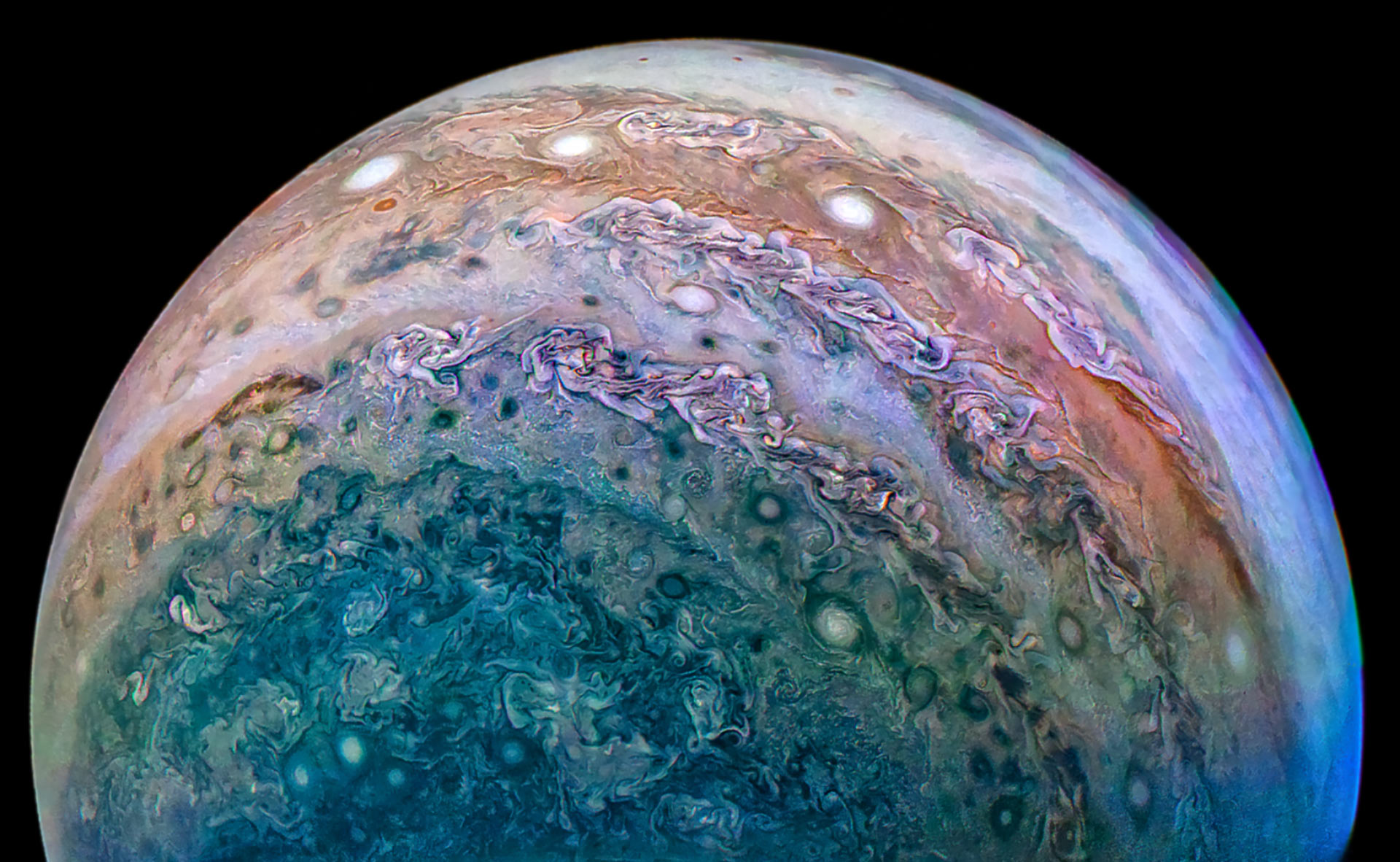
• jupiter, juno nasa

    “Lonely, ain’t it?
    Yes, but my lonely is mine. Now your lonely is somebody else’s. Made by somebody else and handed to you. Ain’t that something? A secondhand lonely.”
    — Toni Morrison, Sula

    I was sitting on my sister’s couch when I found the picture of Jupiter. This picture of Jupiter. I don’t remember where I found it; Twitter, perhaps. But I saw it and stopped scrolling and feelings coursed through me. Shock, awe, that glittery rush of pure, unexpected art.

    And loneliness.

    That’s the one that surprised me.

    Not loneliness in the broad, intergalactic sense. But the small, handheld kind, no bigger than a needle’s eye. It was strange. Marveling at this picture of Jupiter—admiring the whorls of color, the complementary shades, thinking of how one could paint an image like that—and feeling inexplicably lonely.

    See, what I really wanted was to share this picture, to send this picture onward and have that person brim over with the same bubbly wonderment as I’d felt. But I couldn’t think of anyone. And the one person I could think of wasn’t an option anymore.

    And that made me feel lonely. That earthly Jupiter loneliness.

    It’s strange to talk about loneliness. Why does it feel shameful? The scent and grit of weakness? Earthen wanting skin. What a human thing.

    I wish we talked about loneliness more. I wish we talked about the feelings that keep us up at night. I wish we talked less about the weather.

    I’ve been thinking about this post for a while. Loneliness, Jupiter, how feelings can sneak up and yank you into the tides. But after all that thinking, I still don’t have much of coherence to write.

    So here’s this. This is what I have. Here’s what my loneliness looks like these days: I took a walk last night at my new five-month home. It gets really dark out here, which is strange because there’s a neighborhood five minutes away, house windows glowing like jack-o’-lanterns, but the outsides dark and quiet. I walked and got lost and listened to the same song by The National on repeat. I got back to camp and sprawled in an Adirondack chair, neck craned to the sky, looking for something familiar. I found Pleiades and Orion, but I couldn’t find the Big Dipper. And just like Jupiter, loneliness. Right on cue. Because I always found the Big Dipper back in the Adirondacks. Every night I’d feed the animals and hanging over the lake, just visible beyond the farm, the Big Dipper punctured the sky, and I’d walk toward it on the wide dirt path, back to my house. And that’s what’s making me feel lonely these days. The Big Dipper, yes, but more so all the experiences that are mine and no one else’s, how when my housemates invited me to a movie night in their room it reminded me of those countless attic nights in India curled up under a comforter, and god that made me sad, and that’s what life is feeling like at the moment, all these times, all these memories, and no one to share them with, not in any meaningful way. I wrote to a friend about nostalgia the other day, and he wrote back this incredible line: “Telling stories of nostalgia is a way of not being alone in a memory of something gone.” And wowowow that hurts and dazzles and stuns because I want to gush everything to everyone but I never seem to get the stories quite right, they never capture the scent of chai and that warm, tender feeling of fingers entwined with mine. And honestly, nobody really cares. Nobody except me. And I guess what I’m saying is I feel alone in memory and that fills me with this smoky sense of loneliness for places and people gone, and I don’t know what to do about it or if this is just a way of being, if this is just what it means to exist for people like us.

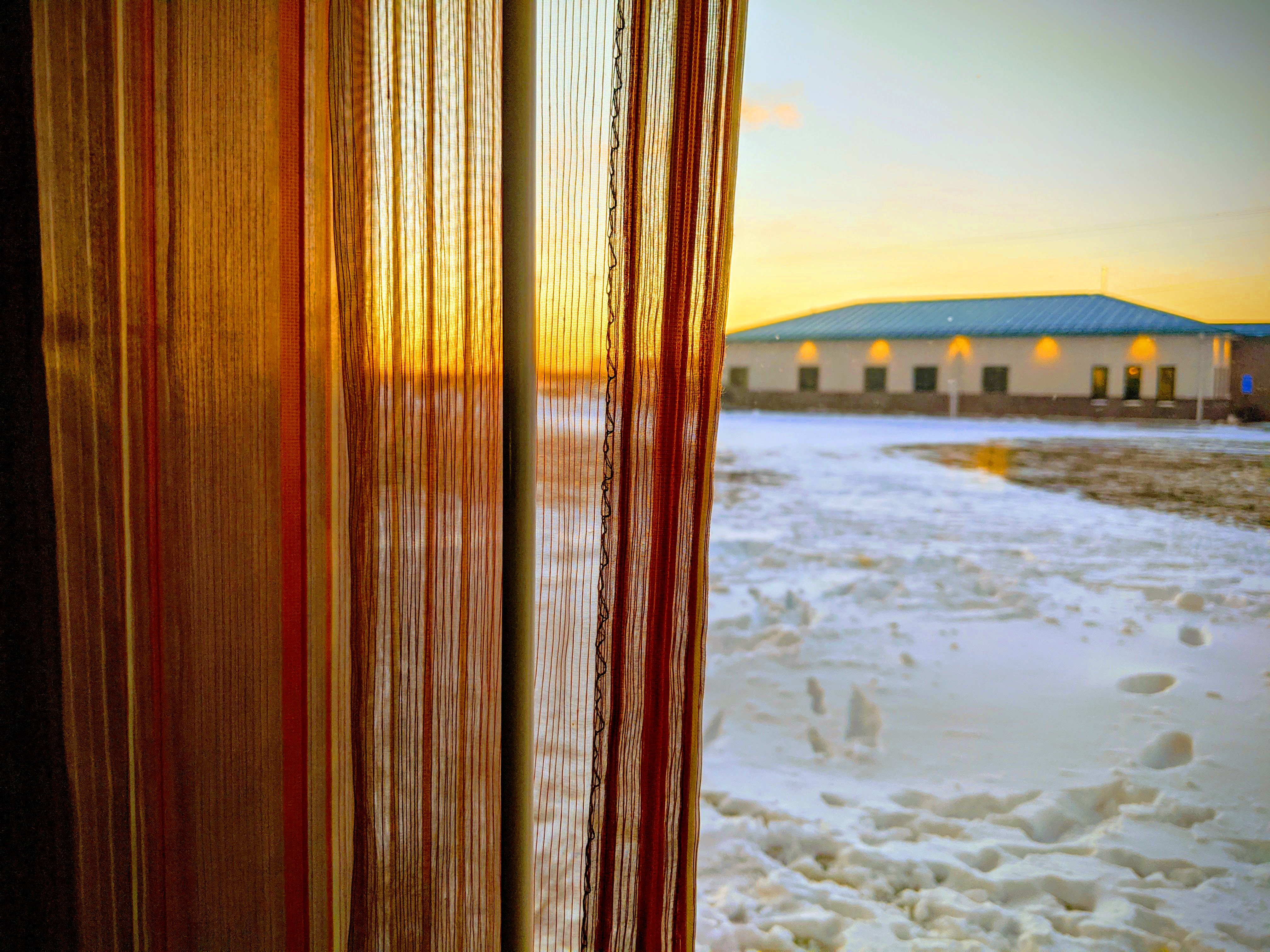
  • IMG_20191230_080828-EFFECTS.jpg

    You are driving through Nebraska.

    Nebraska has always been a drive-through state for you, a large expanse of field and sky, a doormat to the mountains, to your destination. You have no vivid memories of driving through it the other three times prior, only the vague smoke of anticipation, of wanting to be somewhere else.

    It starts off as it has in the past. Flat land. Straight roads. Towns that make you think of the Dust Bowl. But then things start to change. Traffic slows. The other side of I-80 is closed. Sirens scream up ahead and lights wail. You drive by slowly, your mouth falling agape a little, just a little, as you see two pulverized cars in the opposite lane, their frames crumpled like plastic bags.

    It’s a bad omen. But you don’t believe in those.

    First you notice cars with snow on them coming from the opposite direction. And then the sides of the interstate become tinged with snow, cows huddled together near a fence looking as if they’d been sugar dusted. And then it’s here, you’re in it, a white-out of monstrous proportions, the road slick with ice and fear, cars sliding, toppling, over, out, on the ground, in the ditch, in the sky.

    Everything narrows to a pinprick. You cannot keep up conversation because you are focused on the road. Focused on staying in the tread marks of the car before you because if you move too much either way you will skid off the road.

    Many people have skidded off the road.

    It is like a graveyard. That is all you can think. Car after car is stuck in the snowy median, hazards still methodically blinking. As you pass by, you sneak a glance into the driver’s seat, to see if someone is still there. But they are empty. Most of them are empty. (Where did they go? How did they get out of here?) And it is these empty, abandoned, still-blinking cars that make you think of a graveyard, headstones with a splash of fake roses that echo the semblance of life, that whisper, don’t forget me (we didn’t forget you.)

    You drive slowly. Twenty-five miles an hour. Semi-trucks lay belly up in the snow, dozens of them jackknifed and abandoned. Everything is gray.

    Snow blows across the road in plumes—like fog, like ghosts, like strange phantom tumbleweed—and the morbid part of you thinks that it’s every missing soul from all those abandoned cars you’ve passed.

    And then the sun sets. You think it’s the sun but then you doubt yourself. It is an absurd shade of pink, a semi-circle clinging to the horizon as if it was birthed from the ground, not the sky. The edges are too perfect. The pink is too pink. For a second you think an atomic bomb went off, rupturing the sky into nuclear hues. And that makes sense to you for a night such as this. Sudden beauty slicing through the cold, damaged world. (Is beauty always marked by violence? Maybe. You’re not sure.) A TED Talk on climate change just ended and with the nuclear sunset and the graveyard of metal husks on either side of you, you feel like you are driving through an apocalyptic landscape, that after all the glory and tears and hubris, this is what the world has become, this snowy Nebraskan hellscape, this never-ending interstate of sudden abandonment.

    You drive for five hours this way. You were supposed to make it to Denver, but your whole body aches from tension, from gripping the wheel too hard. You pull over early.

    You don’t even make it out of the state.

  • Fotor_157635860729790.jpg

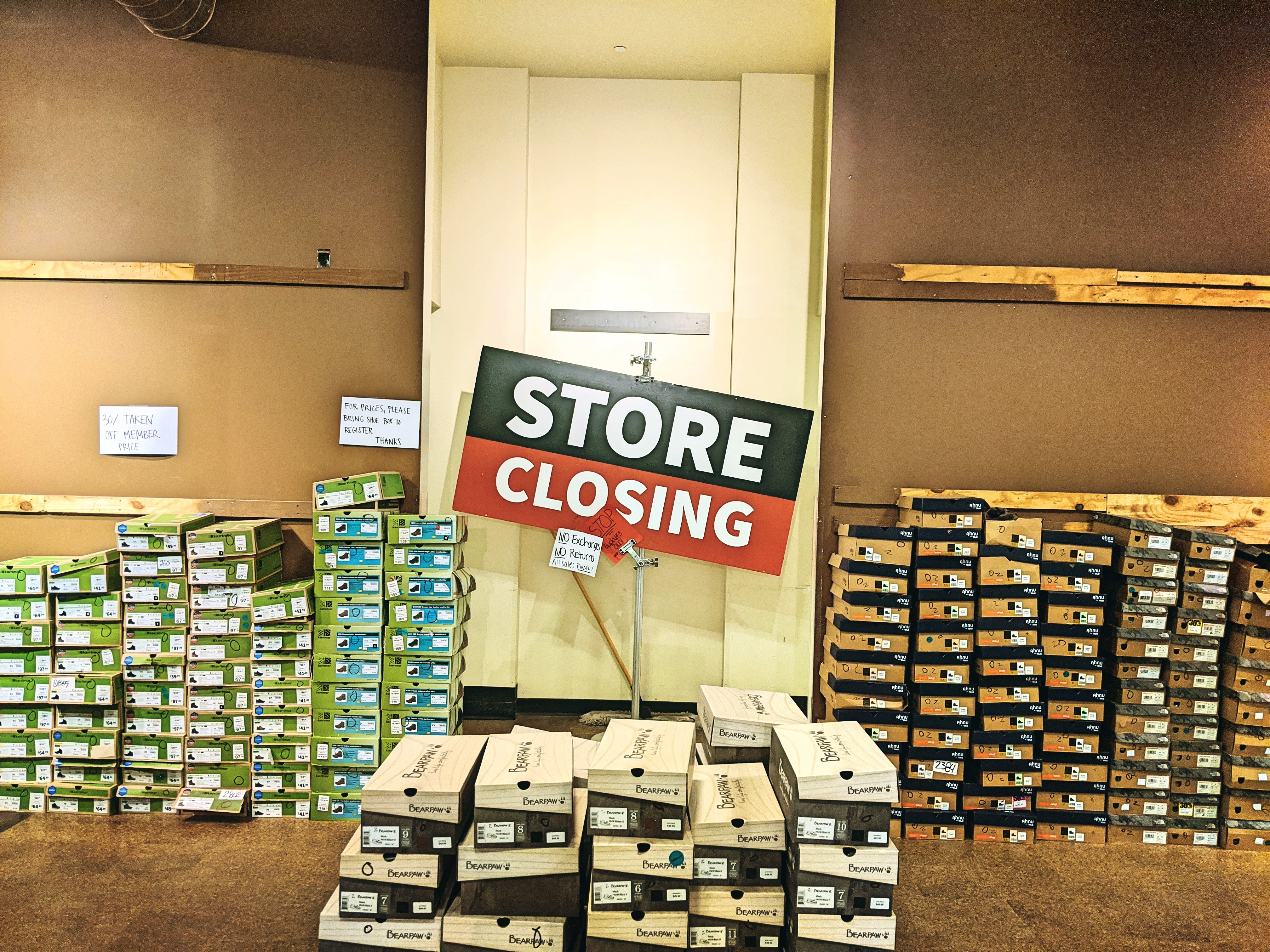
    I remember Eastern Mountain Sports, EMS, back when it was at Martketplace Mall. My dad and sister went to gear up for their upcoming Adirondacks trip and I, the youngster, stomped up and down the small incline used to test out shoes.

    My first backpack was from there. I purchased it in fourth grade, a pale green pack that felt fancy because it had a lined sunglasses pouch and a removable side bag. It went from a school pack to a hiking pack, which lasted me until I was 23 and the fabric began to flake off in my hands.

    EMS’s doors closed for good last week, and I was part of the crew that worked in its final waning hours. We threw the remaining clothing and shoes into huge laundry bins, used a lift to stack them onto one another, and then wheeled them up a small incline to the loading dock and onto the truck. It’s amazing how quickly you can destroy something. How in a couple hours everything will be gone and in place will be a vast emptiness where there used to be objects and meaning.

    I only worked at EMS for a cumulative total of maybe six months—a winter season and a half. It’d be dishonest of me to turn this into a bloated metaphor, something poetic about endings and closure (haven’t I written enough of those?). But the store that was a beacon of otherworldliness to me as a child was a place I ended up working, and I got to see it in its twilight hours. And that means something.

    What I’m trying to say is that sometimes you’ll become the person you always wanted to be. Sometimes you’ll pause and take a breath, look at your surroundings, and whisper to yourself, I’m here; I made it. And that place will be different for everybody. And sometimes it takes us longer to get there. But it’s out there for everyone, I know it is.

    Working at EMS was a positive feedback loop for me, a balm for my insecurities. It was hard walking away from a job, ignoring my academic background, forgoing a teaching gig abroad and plunging head first into wilderness. But at EMS, all the things I did post-college, post-work, those were what counted. My evenings spent curled in the back of my car. The solo hikes. The time spent trouble-shooting malfunctioning camp stoves as kids looked on anxiously. My choices made sense to my coworkers. We were all cut from the same sap-stained bark. Whereas friends and family often questioned what I was doing, why I was leaving certain things behind, no one at EMS cared. I was the girl who worked seasonally at the gear store, spending the rest of the year teaching kids about trees. That was it. That was all.

    It’s a gift, I suppose, to be viewed in a specific, slanted light. For your history to not matter. For your tangled past and jagged edges to be deemed inconsequential.

    I wish I had a great final moment to leave you with, a moment of satisfaction as the doors were locked for the last time and we all cried tearfully, hugging and remembering the beloved customers we’d sold Microspikes to. But that didn’t happen.

    If I had to choose one final moment to encapsulate my time at EMS it would be this:

    It was the last night the store was open and we had just locked the doors. The two managers were in the back counting out all the money, leaving my coworker and I alone at the front. After we’d exhausted ourselves trying to squeeze her into a duffel bag and making a bracket of all our fellow coworkers we thought we could take in a fight, we gave up on distractions and turned to our phones. It was quiet. The store had closed forty minutes ago.

    I noticed it first. My head snapped up and we locked eyes.

    Do you hear that?

    She paused.

    Oh my god.

    Outside in the plaza played the worst Christmas song of all time. A song I’ve only ever heard at EMS and pray to god I never hear again. We’d been making fun of it all day, waiting for it to come on. And it had. In the final moments of Rochester’s Eastern Mountains Sports chapter, perhaps the last song to ever blast through its speakers, the worst song in the world came on.

    And, I don’t know, it was kind of perfect.


    (If you want to read some other stuff about my time at EMS, here ya go.)

    (And, if you’re a total sadist, here’ s a link to that miserable song. The music video is equally horrifying. DON’T SAY I DIDN’T WARN YOU.)

  • nighthawk
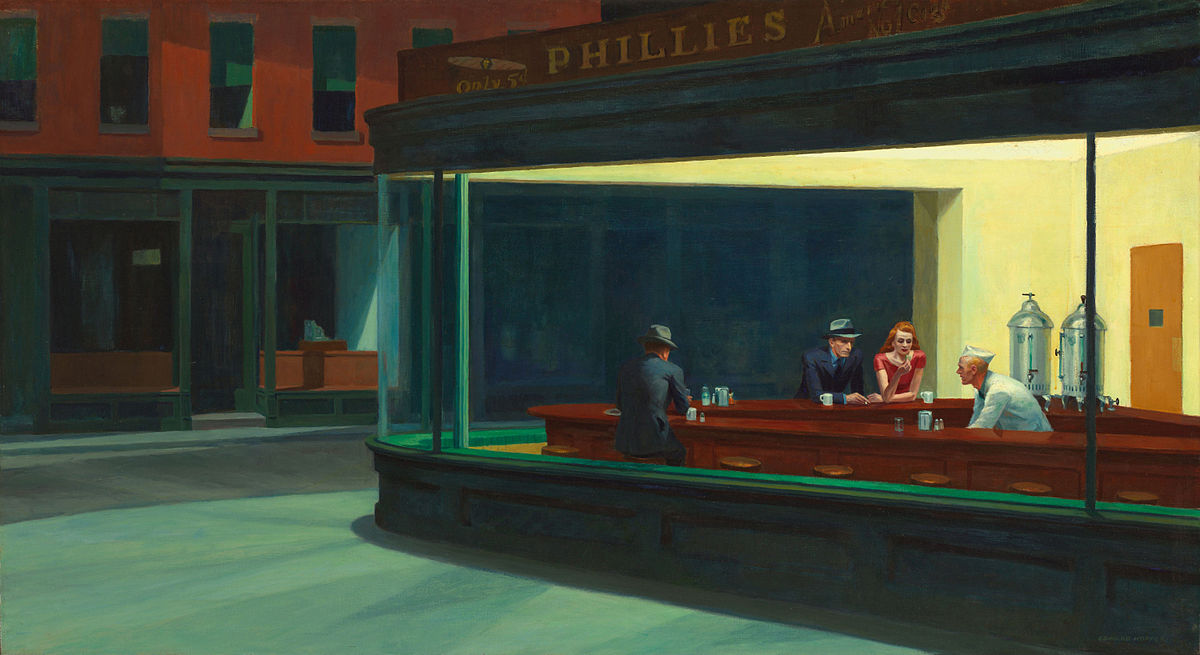
    Nighthawk, Edward Hopper, 1942

    The start of this story is really the ending.

    Here’s how it begins and ends:

    I was at the end of my road trip. Three months spent driving around the States, sleeping in the back of my car, hiking up mountains, dunking my head in wild rivers. This was the falling action of the story, the tide that brought you to the end. The climax had already happened. The hero cycle was complete and the protagonist was on her way home a new and different person.

    That new and different person was me. There wasn’t one specific change. I was still the soft, firm, overthinking, excitable prism of starlight I’d always been. But I’d opened myself up to the world and world had rushed in and somehow everything was different. The wind, the rain, the scent of freshly peeled oranges. You know how it is. Don’t you?

    Don’t you?

    I was spending the day in Vegas, wandering down the Strip during the sunlit hours, weaving in and out of casinos and getting so lost I had to ask security guards for directions. I didn’t buy anything. I didn’t gamble. I splurged on Shake Shack and popped in my earbuds and daydreamed about Cirque du Soleil acrobats as I roamed the wild streets.

    But enough of all this. You’re here for Joanna.

    Joanna was a waitress at an Indian buffet located off the Strip. She had a curtain of dark, thick hair and subtle lines on her olive-toned face. She spoke with just enough of an accent that I struggled to understand certain words.

    Where do you think I’m from? She asked me as I sat at a corner table eating aloo gobi and rereading a book. Guess. Just guess.

    The Middle East…?

    Greece, she said.

    Here’s what happened next. Here’s what you need to know: Joanna revealed herself in fragments, flitting to my table like a pigeon to a park bench, leaving only when her stern-faced Indian boss gave her disapproving stares. She was Greek. She lived alone. She hated Vegas and was moving to New York City shortly, which she was looking forward to. Her parents were dead. She had no close family.

    Let me help you out with the imagery, the plot:

    Me: 25 years old, alone and proud
    Her: middle aged, alone in a foreign land, spilling her life story to a buffet patron

    Picture it like that Edward Hopper painting. You know the one. Nighthawk. Where customers sit inside a glass-paneled diner at some dawn-speckled hour, shadows stretching long on the ground and in the mind, the whole thing reeking of dust-crumb loneliness.

    It was like that. But it was daytime in Vegas. And it was me and Joanna and her frown-faced boss. And it was a gush of words that was more than words and was maybe profound unhappiness, and I didn’t know what to do, I didn’t know how to hold all of it in my hands, so I sat there and ate palak paneer and asked her questions and tried to fight off the darkness, tried to be someone for this stranger woman, this woman with no family in a city she hates, and god I wish there as a handbook for times like those, when everything you do feels inadequate and you realize you are in a situation much larger than yourself.

    I drank chai. I drank water. Eventually it got busier. It was time to go.

    We should talk more, Joanna told me as I asked for the check. She slipped me her number–discreetly, her grumpy-cat-faced boss was still watching–along with my credit card. I promised to text her.

    And then I left.

    What I struggle with are the people I’ve intentionally left behind. The doors I’ve closed because someone was dragging me down and I couldn’t help them. The list isn’t long. But there are a couple. A few. Enough that if the current of melancholy is particularly strong I will think of them–their names, their hands, the way their eyes pinched up in a fight–and I will wonder if there was more I could’ve done. If I could’ve saved them.

    This is something I am learning about myself. That I care so deeply that sometimes I don’t know when to step away. That if some people texted me, after all this, I would still answer. After all this.

    Joanna reminds me of those people. Barely. Just a little. The skein on a lake of sinking bodies.

    And now this is actually the end. I left the Indian buffet and drove to my spot in the desert and woke up early and I drove away. I stopped in Moab before driving to Des Moines, where I spent a long, cold winter. I drove away. I left.

    The last time I texted Joanna, she didn’t answer.


  • Fotor_157350695325064You get into your car and drive. Mile after mile. Left turn then a right. You feel the tension pulling you backward, a slow, forceful tug telling you to turn around, to gobble up your goodbyes, to stay.

    Part of you wants to stay. Staying is easy. Staying is safe. But a storm recently took out a bridge, which took out some electric lines, which caused the other bridge to close, and it’s hard to ignore the gaping symbolism of it all, to view the place without the storm.

    So you left. You are always leaving.

    You remember your first seasonal-life goodbyes. Those were hard. It was the first time you’d lived and worked with the same people, where you existed in a microcosm only the seven of you could understand. You get used to it, one of your colleagues told you when you complained of sharp endings. You thought your soft heart would never get used to it, but in a strange way it has. Endings are commonplace in your world. People and places, they come and go.

    And then there was this season. This season that was really a year and a half in the making. This russet-hued autumn in the southern Adirondacks. Much of it blurs together. A revolving door of children, a pantheon of familiar games. You taught the same program over and over until it was all mindless reflex. None of that sticks out.

    What sticks out are the people. Your coworkers. Friends. How you could go to your friends’ house, take off your shoes, eat pie that wasn’t yours, and share the intricacies of your day to listening, understanding ears.

    Because that’s something you miss. That’s something you’re insecure about. If Hugh Everett was right and our lives are forever splintering into parallel universes, then in one of those lives you never left Pittsburgh. You have a well-furnished apartment and a job and a circle of friends that gather for potlucks bringing homemade breads and casseroles and pies. Community. You miss that. That is something constant motion deprives you of.

    But this last season you had it. You had them. You’d gather in the window booth of the bar eating sweet potato fries while people discussed job interviews and grad school and that one annoying teacher who was woefully unhelpful. You rooted each other on, mocked each other relentlessly, and comforted each other when the storm clouds gathered. It felt mature and youthful all at once.

    And those are the strings that pull at you as you drive away, pavement disappearing beneath your tires. It’s the mountains, yes. It’s the 32.6 miles of lake that holds 550 billion gallons of water, sure. But it’s the people who laughed at your jokes, and listened to your complaints, and played songs from Titanic for you. You felt it this season, that buzzing of hive of community.

    And as you drive away, you are both sad and hopeful–isn’t that what all goodbyes are comprised of?–because you are leaving, but there is future ahead, and it is good and bright and wonderful, and you know there will be others out there who will love you in that gentle, tireless way that friends do. They are out there. You will find them.


  • Fotor_15714447235207.jpg
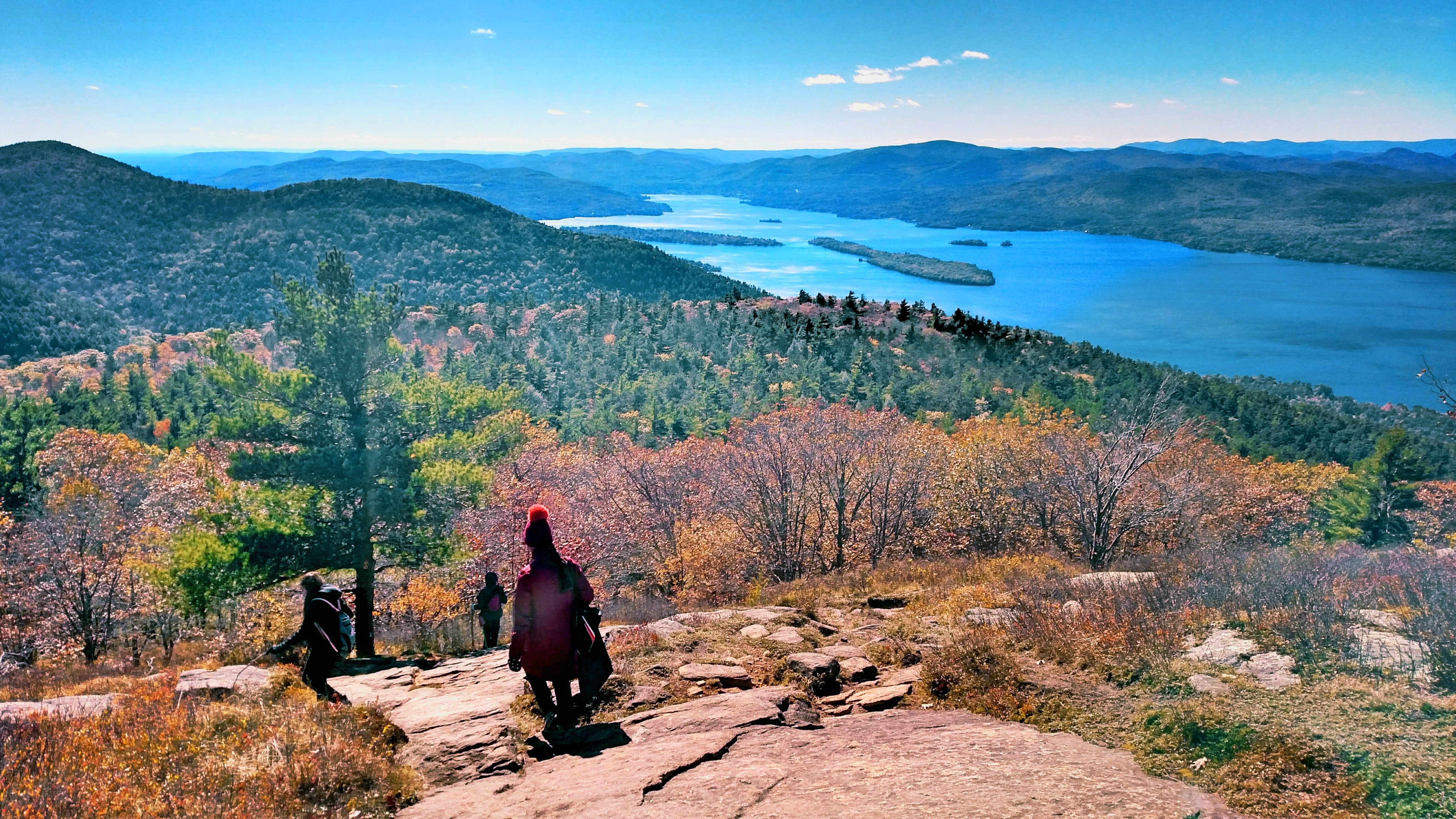
    Hiking down Buck Mt. with some students (that’s Lake George on the right)


    One

    I am sitting at the check-in desk waiting for weekend arrivals. It is early in the fall season, and I’m still adjusting to the shift. Cabins in place of tents, refrigerators in place of bear canisters, paperwork and formalities in place of primal summer wildness. I am sad to see summer go. Even in this bright, wood-paneled room, I feel a little wilted.

    Earlier in the day, I took day campers on a nature walk. We walked up the pipeline trail, reading blown-up placards displaying the pages of Owl Babies. I let the kids read. They were so young I wasn’t sure they could, but they surprised me as kids often do. At each sign we stopped and discussed the book. Why do you think all the letters in that word are capitalized? How does that change the way you read it, I asked them. When a word is tilted like that, what’s that called? The kids were proud that they knew the word “italics.” I was impressed with their literacy.

    I’ve mostly forgotten about that walk, at least shoved it aside to a different pocket of my brain. It’s that way with busy lives. You move on. You forget. But sitting there at the check-in desk, the staff member that shadowed me approaches. I just wanted to thank you for leading that hike. I was really inspired by your teaching, she tells me. She thanks me again and part of me wants to cry.

    She is 17 years old. Still in high school. I hadn’t met her before this morning. And that she came and told me what my hike meant to her, that she learned something, that she thought it was good, it is hard to describe what it feels to be recognized for something small. Recognized and acknowledged and thanked.  Some days it feels like I’m doing the right thing.


    Two

    Today we are working with middle schoolers. Typical kids and a typical program. I’m embarrassed to say how much the schools all blend in, how the faces and activities and excitement become a colored, noisy blur in my head. I pick a random table to sit with for lunch and chat with the kids. One of them is particularly conversational. A boy with blonde hair that falls into his eyes. I purposely choose his group to be with in the afternoon. Because why not?

    The kid trails me like a puppy as we hike. We talk about milkweed and deer and how he wants to travel to Africa. He is intensely curious. We swap nature documentary suggestions, and I tell him all I know about bears. When I tell him I lead backpacking trips in the summer, his eyes grow big and his curiosity soars. He asks me if I have Snapchat and I hedge, telling him camp has Instagram, which instantly disappoints him.

    Before we switch activities and I lose track of him, I grab him a brochure for our summer adventure trips. He sticks it in his backpack and promises to ask his mom.

    Other groups arrive and the courts get busy. The boy approaches me and starts talking, but I only half-listen as I scan the crowd to see where I’m needed. And then, in reference to the summer trips, he says he’s going to come and then mumbles, I could be your ride or die.

    I could be your ride or die.
    I could be your ride or die.
    I could be your ride or die.

    I hate that I can’t remember the boy’s name (Logan? I think it was Logan). I hate that already our conversations have become threadbare and all I could do is loosely summarize them without fragrance. But mostly I hate my splintered attention, how right before he said those words my mind was elsewhere, and I think that maybe this is part of growing up, the widening of attention, the growing list of demands, but how I wish I was a kid who could boil life down to a single moment, who could be swept up in the sight of a lone cat or the feeling of sidewalk chalk in my hand, and how being so small but so centered made you feel so big. In a personal essay, Virginia Woolf wrote,  I cannot remember ever to have felt greatness since I was a child, and some days I think she was right.


    Three

    I am walking along the dark forest path to my house. I call it my house because it isn’t my home, but I don’t know what else to call it. Sometimes language fails me. Sometimes feelings are enough. My hands are full of fresh chicken eggs and I tread carefully across the arched bridge that is always slippery no matter what the weather. My headlamp is stowed in my pocket. I trust my eyes. I walk carefully. I carry those precious eggs in my hands.

    As I walk, I notice a strange shadow in the darkness. I only notice it because I am walking slowly. I only notice it because I am walking without light. It is oblong and slightly rounded.

    An owl.

    All of its details are obscured by darkness, but the shape is distinct. An owl sitting on a branch directly eye-level with me. I like to think we are looking at one another.

    A moment passes like this and then another and another, and it is just us, two gentle creatures of the woods, two dark shadows watching each other in the night.

    And then I leave, chicken eggs in hand. I walk on.


    (Part I of the Three Moments series can be read here.)

  • Fotor_157038990876326.jpg

    When people ask what my hobbies are, only two ever surface: books and the outdoors. Every facet about books. Every nook and cranny about being outside.

    Reading is the most steadfast companion of my life. It is a passion I enjoy both publicly and privately. Some books I love to discuss with friends, sharing favorite moments, dissecting writing styles. And others are too precious to share. They are mine. Selfishly. Intimately.

    I write a lot about the outdoors on this blog, but not a lot about books. So here you go. Here’s a bunch of books and what they mean to me.

    1. The Outsiders by S. E. Hinton
    This was my favorite book growing up. Yes, there was Harry Potter. Yes, there was Inkheart. Yes, there were dozens of other fantasy series I could list off, each which sucked me into a vast and different world. But this was one of the first realistic fiction books I adored, and it set the tone for much of my future reading. I liked books that were sad. I liked narrators that felt cornered by life, pushed into action because they felt like they had no other choice. I liked books where people died.

    I would give a lot of money to read this book again for the very first time.

    2. Spinster: Making a Life of One’s Own by Kate Bollick
    I like reading about lone female authors. The choices they made, the way they navigated their own entrapping labyrinths. The more I read about them, the less I fear being alone. Because you’re not alone. Not really. You have parents and sibling and friends, coworkers and acquaintances and strangers you see on the streets that you exchange a passing nod with. But there is something about being single that feels lonely, even if only because that’s how the world tells you to feel. Reading books about older single women gives me comfort because one day that could be me. Being “alone” for my life is something I am always thinking about and adjusting to. Some days it feels easier than others.

    3. Close to the Knives: A Memoir of Disintegration by David Wojnarowicz
    A book must be the axe for the frozen sea inside us, Kafka wrote. And this is it. This is that axe. Sharp and strong and brutal. This book holds the brand to your skin and forces you to look at the skin as it bubbles. No movement, only screams.

    I remember finishing this book in Hawaii, sitting on the porch of our rented yurt, feeling horrified and grateful and sad all at once. There is a type of gratitude knowing that some strains of suffering will never be yours. You will never know that type of pain. What privilege.

    The abject horror of the AIDS crisis is nearly unfathomable to me. But some days I try. I try to think about what it must’ve felt like to live through those harrowing days, to throw your friend’s ashes upon the White House lawn and know that your ashes could be next.

    All the talent. All the love. Gone. All gone.

    4. Tales of the Madman Underground by John Barnes
    I was standing in the young adult section of the library in a small town in Pennsylvania. Most of the time I don’t get books from the YA section, but I still love to stand there and brush my fingers across the spines and remember when I was in high school and how libraries were a magical experience, how every book had a chance to alter my world, and I could get everything and nothing, and my parents would never ask, and that was perfect because it was my own delight, my own secret world just for me, just for me.

    As I stood there, a teenage boy entered the room. He grabbed a book of anime and then turned to me and pointed to a novel on the shelf. If you’re looking for something, he said to me, I recommend this one. That was pretty much the extent of our conversation. But I got the book. This book. And it felt like this boy had given me a diary to his life, that this book was expressing everything he never told anyone. But he had told me.

    It must be difficult to grow up in a small town. I wonder if the library was his magical place too, the place where he felt most alive, most independent.

    I never saw him again.

    5. A Little Life by Hanya Yanagihara
    This book made me ugly cry.  So loud and unabashed that I worried my neighbors could hear. This book is unflinchingly, unrelentingly sad, and I love it. It is still on my bucket list to take a picture on Lispenard Street.

    6. Tribe: On Homecoming and Belonging by Sebastian Junger
    Last fall, at an outdoors symposium, a woman told me that if she had a million dollars she would build a commune in the Adirondacks because she felt that people were losing their sense of community. God, I wanted that woman to like me. I don’t think she did. At 26, bouncing from job to job, that’s something I deeply miss. Roots. Community. Home. What a primal desire it is, and how sad it is that we no longer know how to forge those connections.

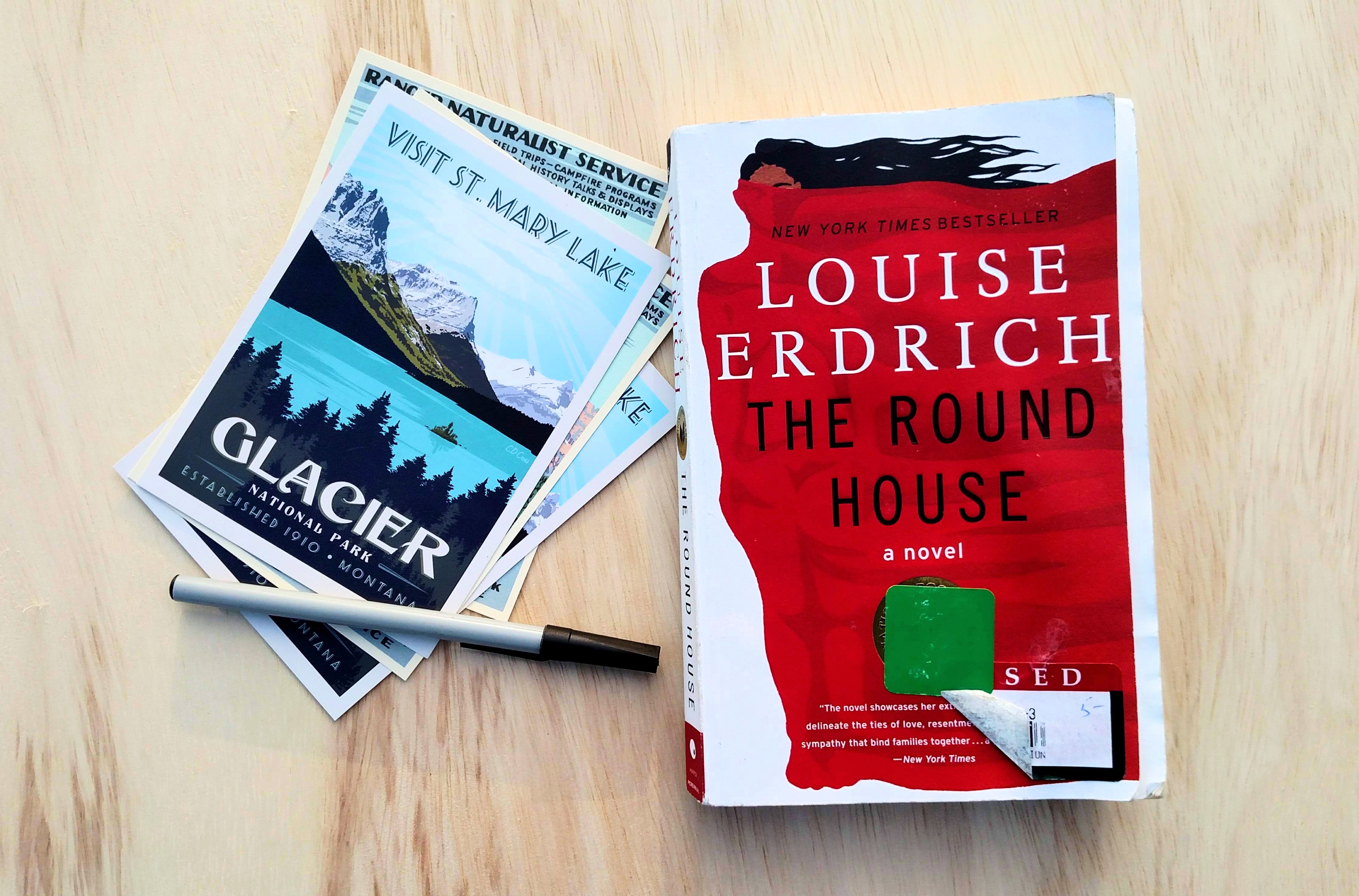
    7. The Round House by Louise Erdrich
    I read this book in Montana. On the outskirts of Glacier National Park, I’d park my car in the woods, set up my folding table and soccer-mom chair, and read while watching the sun set over the mountains. It is the first book I can remember reading by a Native American author. I was 24 then.

    It was rather perfect. Reading this book about Native American struggles by a Native American woman in a place where Native Americans were squeezed out. Driving through Blackfeet territory was fresh in my mind, and I was disappointed in myself for how little I contemplated the modern Native American experience. I vowed to do better.

    This is probably sacrilegious, but here are the last lines of the book, which are 100% amazing and perfect: “On every one of my childhood trips that place was always a stop for ice cream, coffee and a newspaper, pie. It was always what my father called the last leg of the journey. But we did not stop this time. We passed over in a sweep of sorrow that would persist into our small forever. We just kept going.”

    8. The Anatomy of Being by Shinji Moon
    This a perfect book of poetry. I’ve taken this book with me all over the globe because just knowing that this slim black book is tucked into my backpack is enough to keep me afloat. This book is perfect because it found me at a time when I needed it. I often think that happens. That art will save you precisely when you are drowning.

    Shinji was one of the original tumblr poets, if such a thing exists. She posted regularly, and then she published this book, and then she disappeared from the Internet. I like that I don’t know anything about her anymore. I like that she is younger than me and enormously talented. I like that this book is hard to find and in that way it is like my own personal secret, a word-perfect treasure I am guardian of and can dole out to whom I please.

    Wherever she is, I hope she is doing OK. I hope she is still writing.

    9. Lab Girl by Hope Jahren
    Some of the best books are those that make you pause and reexamine your life through a different lens. After reading this book, I don’t look at trees the same way. Because, yes, they are trees. But they are also forest giants who talk to one another, and who have seen the rise and fall of civilizations, and who are cloaked in mystery like another canopy of leaves that no microscope, no formula, can penetrate.

    The other day on a hike with fifth graders, I told the kids that as smart as humans are, we have no idea how to create wood. None. Whatsoever. We can create titanium and construct skyscrapers and build computers, but making wood is beyond us. Wood. One of the best building materials. Something we take for granted every day of our lives. The earth has so much to teach us. We know nothing. The kids thought a lot about that and then began imagining what the world would be like if we could grow wood in a lab. We would never have to cut down trees, they told me. Imagine what the woods would be like, they said. Sometimes kids are really cool.

    10. The Selected Poetry of Rainer Maria Rilke translated by Stephen Mitchell
    This writing is the closest to holiness I know. This book. This translation. Rilke’s changed many people’s lives, and I am no exception. I never lend out my copy.
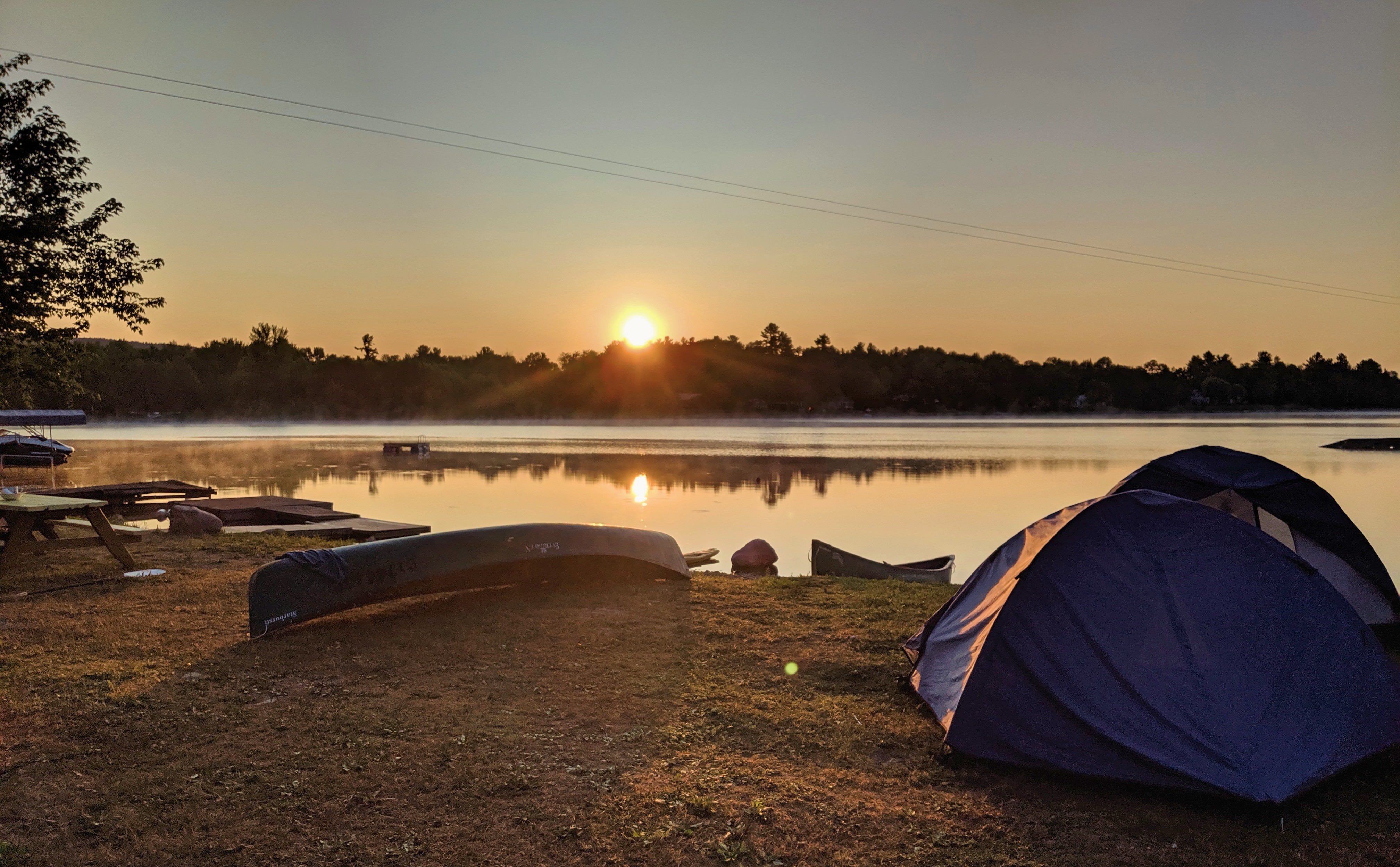
  • Fotor_156934547078591
    A lovely note a group of kids left outside their cabin.

    “Strawberries first shaped my view of a world full of gifts simply scattered at your feet. A gift comes to you through no action of your own, free, having moved toward you without your beckoning. It is not a reward; you cannot earn it, or call it to you, or even deserve it. And yet is appears. Your only role is to be open-eyed and present. Gifts exist in a realm of humility and mystery–as with random acts of kindness, we do not know their source.“
    — Braiding Sweetgrass, Robin Wall Kimmerer

    The sense of an ending is in the air—does autumn ever smell like anything different?—and I’ve been reflecting on these past two years and what they’ve given me. It’s easy to be cynical: I’ve made little money, my retirement accounts have flat-lined, I’ve eaten more vegetarian meatballs than healthy for any single person.

    But here I am. Still.

    This summer I posted my address on social media and invited people to write to me. Send letters, I said. Send pictures, send anything. It was both selfish and altruistic. I’m a glutton for letters, for paper scratched up with ink, but I also believe that sitting down and writing forces you to be alone and connect with yourself in ways we rarely do these days. There is no delete button. You will not know the person’s reaction for weeks to come. You are sending a token of love out into the hostile world and hoping someone cherishes it, appreciates it, sees the vulnerability revealed in that scrap of paper and loves you more for it.

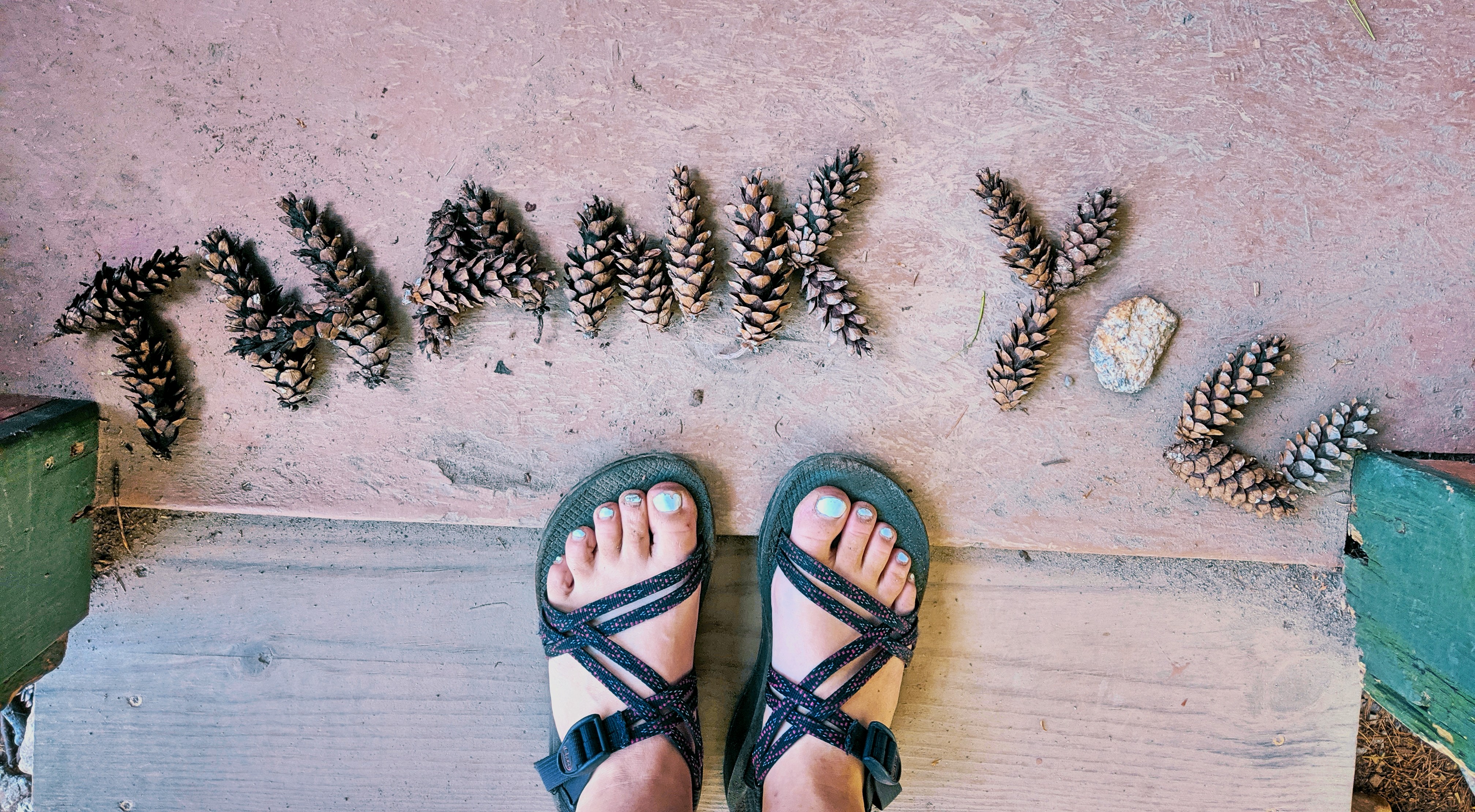
    People wrote me. They sent handwritten letters and cards. They sent poems and artwork and stickers from their local gear shop. And it was incredible. All of it. The words. The tokens of thoughtfulness. The fact that people had taken the time to write and postage and mail a letter when a lot of us cannot even be bothered to unload a dishwasher.

    Those letters were a gift. Every time I found one resting in my hike center mailbox tears sprang to my eyes.

    And it was interesting that nearly every person who wrote mentioned my blog. This little ole thing.

    I never thought of it like this, but perhaps my blog is a gift to the world, a sliver of artistic musings I share with the universe, hoping they inspire and entertain and enthrall. And those letters were a gift to me, small offerings saying, I see you, I’m thinking of you.

    The world’s a beautiful place, isn’t it?

    Gift culture is often thought of as commodity culture, but they’re not the same thing. Not if you see a tufting cattail and smile. Not if you pass along an article to a friend saying, thought of you. Not if you perceive the small treasures the earth offers up to you, the trembling, tentative threads of human connection pushing toward you, as gifts. It’s all there. We already have it all.

    The last time I visited Rochester my mother cleaned my car. My dad installed a new rear windshield wiper.

    gifts. all gifts.

    A summer camp counselor I trained for hikes ran up to me, hugged me, when I returned from a two-week paddling trip this summer. We didn’t even know each others last names.

    what a gift.

    I led a hike with fifth graders the other day, and I told them that the decaying tree stumps reminded me of abandoned cities, and for the rest of the hike they stopped at countless bits of nature and told me what it reminded them of, and I was so grateful that they could still find the magic in the hollows of trees and acorns and spongy moss, and that they shared that magic with me, and that these tiny mundane pieces of nature were really miracles disguised as something ordinary, something effortless, and that everything about nature is an absolute gift.

    This is what these past two years have given me. Less money, more gratitude. Less stability, more freedom. Less tangible items, more intangible connections, with myself, with others, with nature.

    And what a gift that all is. How priceless. How incomparable.


    (Deep thanks to everyone who wrote to me this summer! For the record, you can write me whenever and I will always respond. Address is still currently 1872 Pilot Knob Road, Kattskill Bay, NY 12844, but it’ll change in the next couple of months.)


  • Fotor_156744414292589.jpg
    @ Mattress Factory in Pittsburgh (which isn’t open for free on gallery crawl nights)

    He sat across from me on the bus. I watched out of the corner of my eye as he drew shapes onto a blank piece of paper. Here, he turned to me suddenly. You try. I shook my head. I’m good. He continued drawing. There’s no right or wrong, he said, still doodling with aimless concentration. I’m good, I replied.

    Pause. Here’s what you need to know. I am 21. It is my first summer staying in Pittsburgh. I am an academic University fellow, getting paid to study Anglo-Indian literature in a sea of science students who study neural connections in lab mice, and parasitic growth, and other things that involve lab coats and goggles. I am scared of not being taken seriously. I am scared that my work will be seen as inconsequential. I am self-deprecating and insecure. I miss India. I am desperately trying to call this city home.

    OK. Continue.

    That is the first memory I have of Will. Him drawing nonsense on the bus on our way to an academic retreat. I didn’t want to draw nonsense, but I wanted to be the type of person who could draw nonsense, who could scribble aimlessly in public and not care that it was subjectively bad, objectively meaningless. (There is power in not caring. I knew that even then.)

    Will was a dancer. He wasn’t trained at all, but music played, and the notes coursed through his limbs, and he moved and swayed like gravity felt different to him. He danced at a second-floor studio above a warehouse. You could walk to one side of the open studio and look down below to lines of sinks, and doors, and porcelain tubs, all neatly arranged like terracotta soldiers of the city. It made it more special that the dusty mundane lived right below us while creatures of the night danced up above. In that dance studio you could feel like forgotten gods.

    As you grow older there are places you build shrines to in your head, places that mean more as symbols than structures. That dance studio is one of them, so sacred I don’t even want to share its name with you. I would go there in the darkness and watch Will and the others move like liquid jazz. To piano. To ambient rock. To Radiohead. I would sip cider, and watch them, and write poetry on the walls of this warehouse dance studio and feel like I was interesting, like I was someone worth knowing, and I’d emerge onto the street in even darker darkness and the fact that I never visited the studio in the daylight was important, I never tarnished its pristine mystery.

    I could tell you much about Will.

    I could tell you that one time after leaving the studio I accidentally missed the last bus home. Even now it stands as a beacon of fear in my mind. Alone in a dark city. Who to call. How to get there. There are strange men on the streets. I am nervous. I am scared. I call the university shuttle, only to be told I am too far away. I think of walking the four miles back in the 2 AM darkness. Would I make it? Would I be safe? It is one of those sobering moments, holding a phone with limitless connectivity and yet no one I want to call. (Sometimes we invent our own loneliness.) I hesitate and then call Will. He comes back for me.

    Or I could tell you that Will was an orphan, a strange and heavy word. I could tell you that I once asked him what he thought of people’s reactions to his loss, their gentle I’m sorrys when he shared that part of himself with them. Is it enough, I demanded. Is their response too rote, too cliché to still carry meaning? I was 21. I was starting to think more deeply about words and how they felt when rubbed against skin. I wanted life to feel bigger than it was. It’s enough, he told me. They’re doing their best. I know what they’re really trying to convey, and I’m not sure there are words for it.

    Or I could tell you that once he texted me an apology, and I thought of all the men and boys who owed me an apology, and how he wasn’t one of them.

    What I am going to tell you about is that one night at the gallery crawl. The first Friday of every month the art galleries in the city opened their doors, and you could stroll down the sidewalk and pop into each one, admiring the art and sampling the free snacks and wine.

    I was 21. Nights like this made me feel cultured and free. The darkness and the art and the wine all muddled inside of me, feeling young and old all at once, feeling like a human but also a small flowered vine desperately trying to grow through the sidewalk cracks.

    I could tell you a lot about First Fridays in the city.

    I could tell you that my favorite exhibit was the Victorian basement parlor full of taxidermy animals.

    I could tell you about the loneliness and frustration I felt on a verge of a breakup as I watched a man from an experimental music band thrash a large metal chain against the ground.

    I could tell you that weekends like this made me never want to leave.

    What I am going to tell you about is walking with Will and some fellowship friends down the sidewalk at night (do young people ever live in the day?), stumbling upon a man reading Ginsburg on a milk crate. He recited and gesticulated, the words from Howl releasing into the street like a sudden hymn. And it was about the words, but it was more about the moment, the abstract poetry of it all. We watched in almost silence. He finished and stepped down. Then Will asked if he could read.

    And there it is. The moment I think of when I think of Will. Will reading Ginsburg on top of a milk crate on a dark street in Pittsburgh. That’s what Will was to me at 21. Art and darkness and poetry. And me. Looking up from the ground. Not wanting to read Ginsburg from a milk crate on a dark street in Pittsburgh, but wanting to be the type of person who could read Ginsburg from a milk crate on a dark street in Pittsburgh.

    I was timid about being at 21. Sometimes I still am. Somedays I will stand on that milk crate, but sometimes I still won’t.

    I don’t know where Will is these days or what he’s doing, and I’m not tempted to find out. Because what if he doesn’t dance anymore? What if he no longer lives his life like jazz, as he once told me he did? What if he’s not the same manic pixie boy from my memory (are you familiar with the trope)? Some people are meant to be comets, streaking once through your life, blindingly beautiful, and never seen again.

    And that was Will. That was Will.


  • Fotor_156608180268924.jpg

    “Travel and tell no one,
    live a true love story and tell no one,
    live happily and tell no one,
    people ruin beautiful things.”
    –Khalil Gibran

    Summer is over. There are days of sweet sunlight still ahead and a wedge of time before school, but for you the summer is over. The swell of adventure lays behind you and the steady postmarks of the familiar are just ahead, close enough that your fingers tingle with the chill of autumn and the sound of boots scraping against rock murmurs in your ear.

    You wish you were more excited for this coming fall. You were excited. Once. Three months ago. But then you left and ate wild raspberries on the sides of mountains, and watched swarms of baby catfish move in patterns like starlings, and felt the chill of the thermocline bite at your face.

    Perhaps the most important lesson you’ve learned in the past two years is that you can never go back. Not to the same place. Not as the same person.

    Part of you wants to write about every moment of the summer. You are surprised at how small that part of you is. To write about it would bleed it of its color, and what you really want is to nurture it, to cradle it, to remember the feeling of freedom you felt as you descended Upper Wolfjaw in the rain. It is too soon to rob it of its vibrancy.

    But here are three moments to let loose in the world:

    one
    You are siting on the shore of Heart Lake watching the boys swim in the water. A stranger gives them pretzels and they feast as if they haven’t eaten in days. The sole girl of the trip sits next to you on the bench. You invite her to go into the water, but she shakes her head. You watch people pass in front of you. You are quiet.

    Do you want to be a mother? She asks. The question startles you and you suddenly feel awake. You have been working on a piece about motherhood for months now and sometimes loose metaphors and looser thoughts will drift into your head like a fog. The girl is 14. You are honest with her. You are vulnerable. The two of you talk about motherhood–your own mothers and what it means to become a mother, the sense of loss that accompanies it–as the boys splash about and try to bury each other’s sandals in the bottom of the lake.

    That conversation sticks with you for the entire summer.

    two
    One of the best parts about being 40 feet under the lake is the silence. Words are meaningless. The loudest sound is your own steady breathing.

    three
    You and your co-lead are portaging your canoe through a mile of forest. You both wear 40-pound packs and carry the canoe overhead. People warned you about the bugs, but there are bugs and then there are bugs. Mosquitoes and flies, swarming and biting, ankles and toes, wrists and fingers. You wear rain gear despite the heat because it’s something they cannot bite through. You are the only one who brought a headnet.

    You smile beneath the canoe as your feet swell in your sandals from all the bites. You feel proud because you are carrying a canoe and wearing a pack and being destroyed by bugs and you are good, you are wonderful. Once upon a time, you sat behind a desk and watched for flash sales at REI to buy gear, hoping but not knowing that an adventure would be on the horizon. And here you are in the wilds of Canada. Here you are. You are doing it. You made it.