It is fall, I guess, and none of the leaves are turning color. That’s not true. The western sycamores in Big Sur are. The coast live oak whose leaves perpetually carpet camp’s trails. The lone sugar maple in Yosemite whose blood heart leaves people drive three, four hours just to see, just to witness.
This was my camp setup for the three nights I spent helping/attending wedding stuff. The silliest, honestly. (Picnic table not pictured; that really brought it all together.)
I went to a wedding on July 23 for my best friend from college. All of my memories of her are good ones. We were study abroad roommates and OK friends and then better friends stateside once everyone else disappeared and it was just us and the streets of Pittsburgh and Primantis at 1 AM.
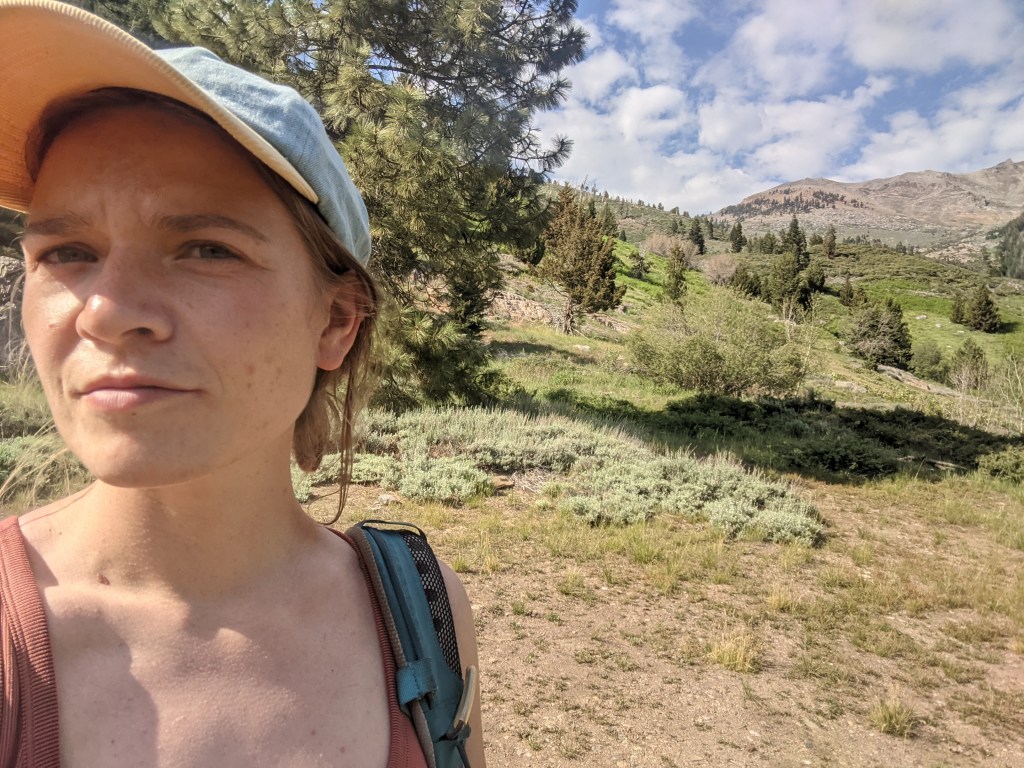
Me after my muffler semi fell off in the wilderness and I ditched my car and went hiking anyway
My friend’s ex girlfriend messaged him the other day, apologizing for how she behaved in their relationship. Like any good friend, he sent me screenshots of the conversation. And, like any good friend, I poured over them and gave them a thorough analysis. And, like any good friendship, we eventually talked on the phone and debriefed about what she was articulating and how both of them handled the situation. (10/10 recommend all the above.)
Over the course of the messages, it became increasingly transparent that apologizing wasn’t really the intent. She was looking for closure, which she acknowledged, and, digging deeper into the words she didn’t say, I think she was looking for validation that the relationship meant something to him, that she meant something to him. She dredged up the past because she couldn’t move on and she wanted to know if he too still found treasure in the wreckage.
If you’ve read this blog for any length of time, you know my thoughts on closure, particularly in regard to relationships, so I won’t repeat myself here.
This one is about apologies. And how they’re dumb.
There are different types of apologies and some of them I find valuable, but what I’m interested in are two bottom-of-the-barrel types of apologies: the confessional and the performative.
The confessional apology is the same as a typical confessional in that it’s about the person confessing, not the person receiving. There’s an embedded narcissism in it, something sticky and rank. Apology as catharsis. Apology as ego-soother. As a confessional, this apology is offered not as a balm to the wounded but as a salve to the self. The confessor/apologizer has less interest in healing the hurt and is more interested in forgiveness, words to assuage their guilt.
I was first introduced to this apology many years ago when I was hanging out with an ex boyfriend and he told me that he’d cheated on his girlfriend. He was conflicted on whether or not to tell her what he’d done. He said he couldn’t imagine not telling her; however, some of his friends had told him that telling her was pointless, that his brief fling was over and that the act of confessing would give him relief but would only give her hurt. He ended up telling her, and though they stayed together for a while after that, they ended up breaking up because of it. She never trusted me the same, he told me.
I’ve thought about his friends’ advice for years. Apologies as absolution. That’s what it is.
And honesty is laudable, I suppose, but there are no heroics in an apology of this type. Confessing isn’t brave; it’s the work that comes after that does or does not deserve applause.
And then there’s the performative. The rote apology. The I Am Sorry TM.
To give you an illustrative example, another one of my friends texted me that she was angry with her partner. He did something insensitive—an action which they’ve talked about in-depth before—and when she called him out on it, he apologized. But then she asked, Don’t you feel bad?
And he said no.
He said no!
I would argue that performative apologies make up the bulk of apologies (I am guilty of many). And this why a lot of apologies are dumb. Because they’re lip service. Perfunctory guilt. People apologize because they know they should, but there is no deeper feeling attached, no larger action required of them. You get to say “I’m sorry” and move on. But what about the person you’ve hurt? What does your apology change? They are left with their frustration and your words, but the emotional work remains on the wounded, to feel better, to heal, to always be the one to articulate their pain or their feelings and to ask for more.
One of my all-time, gold-star, shove-your-head-in-an-oven favorite apologies is I’m sorry you feel that way. I received one of those this year and it ruined my entire week, maybe even month. I’m sorry you feel that way. That is lowest possible form of apology. It is an apology in name only. It is the same as when a two year old scribbles with crayons on the dining room table and you call it “art.” I’m sorry you feel that way. An apology like that claims no responsibility. The person is not acknowledging that they’ve done anything wrong. There is no reflection. No change. It is arguably the same as saying, Ope! Bummer to have feelings, eh? It is decisively making the hurt a *you* problem. They are washing their hands clean of it.
I am tired of apologies because I am tired of feeling like I deserve a genuine one. I am tired of carefully crafting my feelings into something palatable and saying you’ve hurt me and them saying sorry and then doing the same things again and again. I am tired of people believing that apologies are all you have to do to fix something. I am tired of people not putting in the emotional work to better develop empathy for others.
And I understand that my feelings aren’t someone else’s problem, that how I feel is within my control and I am in charge of managing my feelings in a healthy way. And in some ways, yeah, the I’m sorry you feel that way apology is really valid. I get that. But I see this narrative of “other people’s feelings aren’t your responsibility” being used as a way to skirt accountability for shitty actions, mainly among men. It’s like they watched a single therapy TikTok, internalized this mantra, and apply it to all of their relationships. They toss around this phrase and never reflect on how they are causing this hurt, intentional or not. It’d be like if I ran over their dog and then said I’m sorry if you’re sad. The point is that I ran over their dog, that, whether or not I meant to, I caused them hurt, and what I should really be apologizing for are my actions and the hurt I caused. I feel like this nuance is lost in many conversations, and I can’t help but wonder if it’s because of the way we perceive women, how we always see them as emotional and often their emotions as inconsequential. Empathy is a “soft” skill. It’s not something many people put time into. And it shows. It fucking shows.
This season I led several restorative justice circles for students where we model accountability, community, and honoring individual voices and perspectives (one was for pranking someone by shoving poison oak in their face, and the other was for throwing someone’s pet lizard irretrievably beyond the fence. Kids. Incredible.). In those circles, we talk about what makes a good apology. The apologies are rarely spectacular. Kids mutter I’m sorry to their feet. They don’t make eye contact. Sometimes they giggle. But we try. And they’re kids. They’re still learning.
I don’t have any solutions for how to make an apology mean something, to have it go beyond mere lip service. I think at the heart of it is how do you make people care, how do you make them see that other people’s feelings are as real as their own. I don’t know.
If anything, I’m sorry for not being more empathetic, my friend wrote to his ex girlfriend.
I genuinely appreciate the apology. It actually means a lot, she wrote back.
I haven’t written on here much, even though a lot has happened and I have a lot to say. I have 19 drafts on here from throughout the years, all varying shades of completion. I view this blog as a scrapbook, a time collage. If you enjoy it, great, but it’s mostly for me. People have told me I should switch to Medium—that’s where the views are, that’s where the money is—but I don’t want my personal thoughts to be monetized. Too much pressure. Too much work. I like my small corner of the internet. Anyway, here it goes. I hope you all are well, silent anonymous readers.
What does it mean to be actualized?
the duplicitious feeling of wanting to be perceived only by a select few, only in a certain slant of light, and to remain invisible to all the rest.
One of my high schoolers from the fall emails me for a letter of recommendation for nursing school, and my heart warms and sighs and pulses. They are all graduating soon, any day now in fact. I desperately want to know what they are all doing now, and I loathe that I never will, that we were both fleeting figures in each other’s lives and it was never going to be any other way. I think about J the most.
I still hear from L. He’s emailed me sporadically over the past couple months asking for writing guidance. One of the characters he is using is one he created for my class. In his last email, he sent me two passages, an original and a revised scene, and asked me to look at the improvements he made. I never know when to give only affirmations, when people really just need support, and when feedback would be valuable; it’s something I struggled with my staff this past season too. I see myself in his work. Young writers overwrite everything. But he gets it. He’ll figure it out. He has the skill, as I’ve told him countless times. I mention that the internal dialogue has a perspective switch and he emails me back with a follow-up question, so I find an online article about third-person stories with first-person inner voice and it feels good to be discussing craft, to be analyzing the bones, and I think back to my most recent graduate course in writing and how good that felt and I don’t know how to get that feeling back, how to get that feeling to stay.
I told my sister that if a recession hits and I lose my job that I’m moving in with her.
I went on a date the other week. I’ve been trying. Honestly, I have. A lot of life feels like going through the motions of it all without any real impact. I feel like I should be happy or grateful or excited, but I don’t really feel that way. I can’t tell if this is a sign of growing up or seasonal distraction or deep mental illness.
Anyway, the date. I’d met up with him several times before, and he was someone in theory I should like very much. I wore a thrifted skirt and a thrifted jacket and the t-shirt of a guy I briefly dated.
Anyway, the date. The conversation goes and tumbles and streams, and I would go into more detail, but I am very aware that this is not Tumblr circa 2013 and that I have no idea who is actually reading this withering blog, and so everything is filtered and molded and shaped. (I am…mature?)
Anyway, the conversation. He’s into food culture in the same way that gym bros and thin women are, and, because I’m insufferable, I ask him if he’s heard of Jordan Peterson, whom I only recently learned about thanks to the sole podcast I’ve been streaming for a month. He nods and says he’s vaguely familiar. I push for more (because I’m insufferable). I bring up the phrase “diversity, equity, and inclusion” in the same sentence as Jordan Peterson (because I’m insufferable), and I make eye contact with the guy as he says “that’s not really something I know a lot about” and I don’t push deeper because it’s not worth it, but I am simultaneously incredulous and not surprised at all that a man who can talk intelligently about vestigial hip bones in whales has spent no time or effort learning about contemporary diversity efforts, and for not the first time I think about what it would be like to not contemplate things that don’t affect you, to have that luxury, to have that shallow interest in the world. This is something I think about frequently. I complain about it to one of my best friends whom I talk with regularly. Wanting to care less think less know less. Wanting not everything to touch so deeply.
(And by “insufferable” I mean asking basic questions about people’s values and beliefs because I have aged out of the era when I have the time or interest to invest in passive people.)
I am so angry about Uvalde, about the Supreme Court, and I don’t know what to do with this anger.
My high schoolers would talk about mass shootings sometime. I’d go out the window, one of my seniors said. I taught on the second floor. It’s protocol to lock your door during a lockdown. The problem was that my door couldn’t lock from the inside—you had to open it, shove a key in the lock, and then close it again. I never locked my door normally because it was disruptive to have to open it every time someone needed to come in. But I thought about that door often. Would I open it to lock it if there was a shooter in the building? Would I risk those 30 seconds? Would that be enough time to doom us all? In my head I would try to calculate if all the classroom furniture pressed against the door would be enough to thwart an intruder. I didn’t think so. My desk was very light, and the bookshelves would be difficult to move. I never let myself think about what I would do if I locked the door and a student knocked during lockdown. Protocol is that you don’t open your door for anyone. Even if it’s a student. Even if there’s a shooter in the building.
My first instruction about armed intruders was at my very first outdoor education facility. If an armed individual came to camp, we were supposed to take our kids into the woods, as far away from the lone road as possible. We were to take them into the woods and go go go. We carried maps in our backpacks at all times and those maps were divided into quadrants and those quadrants would give adults a good idea of where to look for us once it was safe and we could tell them approximately which quadrant we were in. A lot of that plan hinged on having cell service. Also on reading black and white and dubiously accurate maps.
One of my friends from REI texts me occasionally with the ongoing store news. People leaving. People joining. People doing the same stupid shit. I like these texts. It makes me feel like I had a community. I like knowing that people miss me, that people are thinking about me. He texted me recently that he heard a song and thought of me. It was from the new Big Thief album.
I readthis post by Internet Princess that wrecked me. It’s about media consumption and how we—girls/women—often develop our sense of identity based on the female characters we absorb. I’m not sure it’s possible to exist in isolation, to develop some sort of pure, unadulterated identity. I’m also not sure forming identity around a cultural zeitgeist or romanticizing your life is necessarily bad. Sometimes you have to repackage your life to make it palatable to yourself. You want to see your experiences mirrored back to you, and for those experiences to have mattered. I read this post and it wrecked me, and then I paused because I wanted to share it with someone, I wanted someone to get it like I get it, and I couldn’t think of anyone. Not really. Not who would respond thoughtfully. Not who would engage with it like I wanted them to. That hurt more than the essay did. That Jupiter-loneliness type feeling (iykyk).
I was in Colorado this time last year. I could be convinced that that was the most beautiful place I’ve ever lived. I miss the trees living in California. There isn’t enough green.
I rewatched Call Me By Your Name, and I read Normal People, and I binged the new The Summer I Turned Pretty, and I and I and I. You get it, don’t you?
The worst thing about cell phones is absence. How interconnectivity has always granted us presence and it is palpable when the pixels disappear. I have yet to find settledness in my own human wanting.
Everyone in Pittsburgh posted pictures of the sky the other day, and it made me lonely. They were mammatus clouds.
Wrote this at a food court in an Iowa mall in 2017 back in my travel writing days. This is one of the review versions, so the editing isn’t tight yet, but the good shit’s still there. It was originally published in the print edition, Issue 2, of Allegory Ridge.
I can not adequately describe the chokehold that this guy had on me in my teenage years.
Last weekend I finally got around to reading Midnight Sun. If you’re unfamiliar, Midnight Sun is the long-awaited addition to the Twilight series, a rewrite of the first Twilight book from the other main character’s POV. It came out in 2020, and I honestly don’t remember how it was received, whether it premiered with fanfare and exploded onto the bestseller list, or whether the pandemic dimmed its comet streak. The book is 658 pages, and the cover is of a split-open pomegranate, the whole book a loose allegory of Persephone.
I read it in two days. Sprawled on my floor-perched mattress, Pendelton blanket tangled between my legs, finger tapping on the right side of my Kindle. The story was familiar. Not only have I read Twilight a dozen times, but a draft of Midnight Sun was leaked in 2008, which I endlessly devoured, hoping the author would release the full-length book.
And she did. Twelve years later.
It is an understatement to say I was a big Twilight fan. I could get into detail, but I won’t. The midnight premieres, the movie showings, the birthday party I hosted for Edward Cullen, the elaborate chess-themed cake I made that required a whopping 16 sticks of butter (that buttercream frosting, ya know). Part of me is slightly embarrassed about it all—probably because most of the world, especially the literary world, tells me that loving a series such as Twilight is not something to be proud of—and part of me is protective of those memories because I miss those days when books extended beyond the printed page.
Reading as a teen and preteen was something different than it is now. It is not dramatic to say that books consumed me. I read voraciously, and when I wasn’t reading I was often continuing the story in my head, reliving and rewriting scenes. I looked forward to blank spaces of time—bus rides, walks, the liminal space before sleep—because it allowed the story to unfold further in my head.
In high school, I went on a family vacation to San Francisco. I was in the midst of reading the Twilight series for the first time during that trip, and now, as a 29-year-old woman, yes, I still remember Ghirardelli Square and the sourdough bread from Boudin Bakery and walking through Haight-Ashbury where a man startled my sister as he emerged from a trashcan, but I equally remember how alive the characters felt during that time, how I predicted events, created new plotlines for the characters as my family and I walked through the sloped city. So much of that trip was only within my own head, and I remember those unreal memories just as vividly as the world my body traipsed through.
Diane Setterfield puts it best in The Thirteenth Tale:
“…And there has never been a time when reading was not my greatest joy. And yet I cannot pretend that the reading I have done in my adult years matches in its impact on my soul the reading I did as a child. I still believe in stories. I still forget myself when I am in the middle of a good book. Yet it is not the same. Books are, for me, it must be said, the most important thing; what I cannot forget is that there was a time when they were at once more banal and more essential than that. When I was a child, books were everything. And so there is in me, always, a nostalgic yearning that one never expects to be fulfilled.”
I desperately miss the way books made me feel growing up. It is a high I am always chasing, and it is harder and harder to find.
I miss daydreaming about fictional characters instead of real people. I miss how I’d linger over certain passages, certain scenes, and carry them with me throughout the day. I miss being in a motel room with my teammates and them asking “what are you doing” and realizing that I had started pacing the room in anxiety out of what was happening in my book, that I was so inside of my head, inside of the storyline, that I hadn’t even noticed I’d left my bed and was walking around. I miss friends messaging me, guess what chapter I just started!! He dies?!?!?! I miss sitting at the computer in my family room crying while reading fan fiction, and my mom poking her head around the corner and asking “is everything OK?” while I nodded through my tears. I miss how I could slip in and out of worlds effortlessly. I miss loving a book so wholly that I would start it over again as soon as I finished the last page.
I don’t know why I lost that ability to submerge myself in books. It doesn’t happen to everyone (cue research about maladaptive daydreaming and disassociation). Maybe it’s because my own life is now vibrant and interesting, or because as my knowledge of writing and books has increased, my taste in literature has gotten pickier. Or maybe it’s because being an adult means that there’s always something to do, something to worry about, and I no longer have the mental luxury to let characters in completely.
Something they don’t tell you about growing up is that you’ll miss all the selves you’ve left behind.
If you’re still reading this, this post is about Twilight but really its about the cavernous well of nostalgia that exists inside of us all. It is about my teenage crush on Edward Cullen, sure, but it’s about how little in life feels as real, as intense, as things in my teenage years did. It’s about how you live with your sister and your parents for 18 years and then suddenly you don’t anymore and you never will again, and childhood becomes this unreachable phenomena that happened to someone who was you but also distinctly not you, and you don’t want to be that person again, you’re happy with who and where you are now, but childhood and teenagehood retain this aura of sugary wonderment where everything in life was a live wire and the nostalgia coats on, layer after layer, and sometimes when you’re feeling really down and out, you wonder if anyone will love you more than your high school boyfriend did for that narrow slice of time, and you glorify everything once it’s over—the past is easier to swallow once it’s dried and peeled—but you reread your high school journals and you miss the way everything made you cry because multiple people yelled at you this week and you didn’t bat an eye, you barely felt a thing, and even though you’re living the life you’ve always wanted sometimes it feels like you’re existing in a fog, and maybe that’s covid or maybe that’s being in your late 20s or maybe you’ve changed in some metamorphic way, but life rarely feels as ecstatic as it did back when it mostly existed between the pages of a book.
I chatted with my sister about this, and she told me that endorphins and serotonin peak in our teenage years. They peak and that’s that. You’ll never feel that rush again. Not of that height. Not of that intensity.
I hate this fact.
And maybe that’s the reason books meant more to me then. Maybe that’s the reason it is so hard to find a book worth staying up till 2AM for. Maybe. But maybe not.
I’ve been pecking at this post for about a week now, and already I’ve forgotten most of Midnight Sun, the impression the book left bleaching within a mere seven days. The car chase scene toward the end was really good, that was a sticking point, but the characters have already left me. I commute to work and write meeting notes in my head, and make a list of the emails I need to return, and the vampires remain buried. I hate that I’ve moved on. I hate that I can move on, that the addictive quality of those words is utterly lost.
One of my students from the fall continues to email me sporadically. He emails me snippets of stories he’s working on, one of which features a character he made up in my creative writing class. I miss writing fiction, but that’s a whole other topic. Through his writing, I see that he gets it, that he too feels that calling, that longing for worlds nestled inside of books. Keep going, I want to tell him. Keep writing, keep pushing, keep dreaming. It doesn’t last forever.
Mitski is currently on tour, and it’s spurred a lot of talk. Was anyone else at the L.A. show and it was. . . bad? Someone posted on TikTok. It was the audience, right? Doesn’t anyone know concert etiquette anymore?
Mitski tweeted the other week about limiting phones at concerts. It was lovely—beautifully written, poetic, the thoughts about connectivity and shared spaces so true and needed. As an artist, she felt a disconnect when she looked into the audience and saw a sea of lights. She wanted it to be two people sharing a moment, sharing a song together. She wanted the moment to exist without forced preservation.
Naturally, the internet exploded.
But this is how I remember things. You shouldn’t police people on how to enjoy a concert. They can do what they want. My phone helps me feel connected. It helps me relive moments.
Mitski has since deleted the tweet.
Someone noted that Clairo had to reprimand concertgoers recently. Girls in the front kept shouting comments up at her, and the person noted that it looked like Clairo was uncomfortable with the loud attention, the unnecessary comments that had nothing to do with her music. The irony! Being unwantingly objectified is exactly what Clairo sings about, the girl said.
the girls that get it, get it
**************************
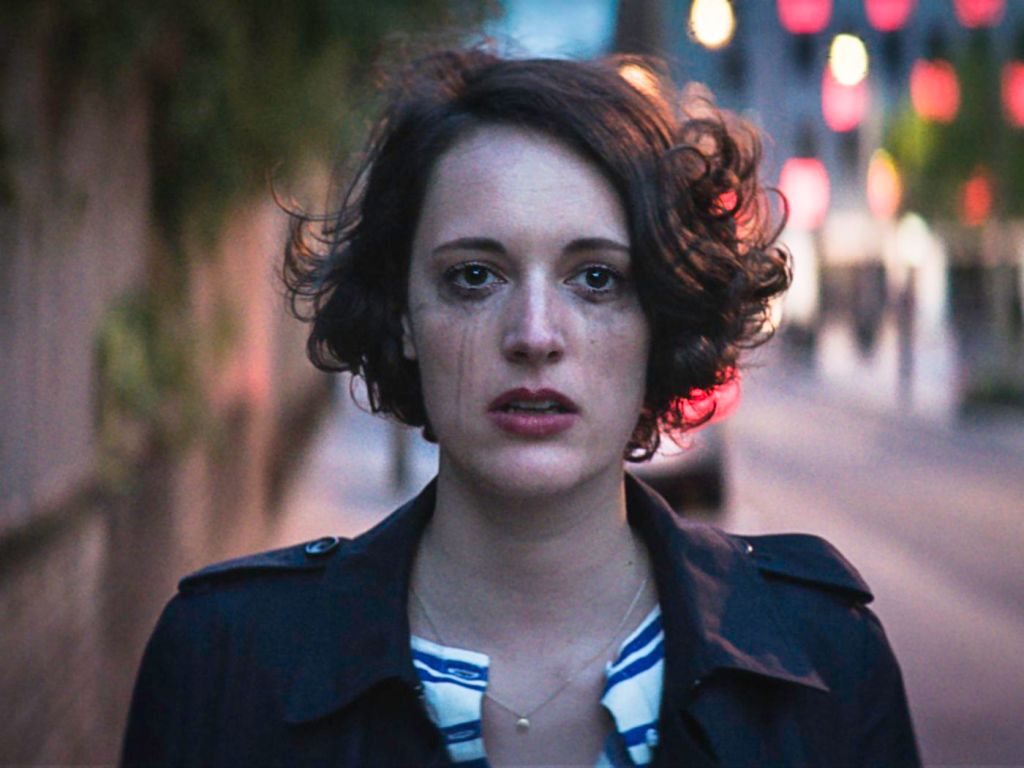
I’ve been thinking about Fleabag a lot recently. I think about Fleabag in the same way I think about Woolf, which is that they are a constant thrumming inside my head, a glint of obsidian in my subconscious, and in that way they are always there, always present, and I am not ever not thinking about them.
Have you ever wanted to punch someone in the face? One of the naturalists asks me at the turf while we wait for kids to arrive.
Kind of, I answer. I want to be the type of person who *wants* to punch someone in the face, if that makes sense. But I don’t really care about the actual punching.
This continues to be an ongoing discussion among the staff. J. would very much like to get in a bar fight. Everyone thinks she is crazy for wanting to punch and be punched, but on the second night of staff training, we bonded over our love for Fleabag and that shared mutual interest explains the punch lust wordlessly.
the girls that get it, get it
**************************
I’ve never dissected my feelings about Fleabag with anyone else. In some ways, I don’t really want to. You get it or you don’t. Either something twists inside of you when the guy walking past her coughs “whore” when she thought he was going to check her out, when everyone believes her skivvy brother-in-law over her when she’s the one telling the truth, when the Hot Priest says “it’ll pass” and the rain keeps falling and that damned fox walks by or it doesn’t.
You’re either a pee girl or a piss girl, my staff tell me. You’re either a mouse or a rat, they say. How do you know? I ask. You just *know*
**************************
If you have to explain something to someone, it dilutes the meaning. Not as a universal rule, but in a Mitski lyrics, Fleabag, piss girl kind of way.
If I have to explain to you why Olivia Rodrigo has every right to be mad that he’s singing Billy Joel with another girl why Bella’s reaction in the second Twilight book is not melodramatic why Call Me By Your Name isn’t just about first love, but about feeling that longing, that missing, 30 years later, and realizing that it wasn’t just a summer fling but that was your person, your person, and you fucking let them go
then it wasn’t for you.
the girls that get it, get it
************************** This is a conversation several of my friends and I have been having. It revolves around the idea that a gesture or a phrase loses meaning when you tell the person to do or say it. For example, if you are feeling particularly unloved, and you tell your partner “I need to hear that you love me,” why doesn’t it feel as fulfilling when they then say it? Why would it mean so much more if they said it instinctively, if they knew how to read your needs and meet them without being explicitly told?
I feel that this is asking everyone to have similar communication styles, which is unrealistic, but what I don’t feel is unrealistic is asking everyone to put in the appropriate emotional work. If I can read bell hooks and evaluate my own anxious attachment style and be reflective about my own needs and actions, why can’t you, Brad or Joe or Chrissy? Why?
Often I hate being the one to put in the work. I plan out confrontations in my head. I rehearse my lines before openly expressing emotions so I don’t upset or alarm. I reflect on my actions, my words, and make plans on how I can do better in the future. I try very very hard not to hurt the person’s feelings, even though they’ve probably hurt mine.
I don’t want to punch someone, not really, but I want to key a man’s car when I am sober and hurting and the night is there as an embrace, I want to key his car and then walk away. All actions. No words. Once. Just once.
**************************
the girls that get it, get it
**************************
Someone called me jaded the other week, and I can’t stop thinking about it.
I’m not sure they’re wrong, but I’m also not sure that being jaded is bad. Don’t we take our experiences with us? Doesn’t the world shape us as we walk through it, pressing scratching marring biting?
It feels too privileged to be 29 and not be jaded in some capacity.
**************************
Don’t even get me started on the Cool Girl speech from Gone Girl.
**************************
My senior year in college I went to a Rachael Yamagata concert. It took place in one of the converted churches in Pittsburgh, and a friend and I were seated in a row of collapsible chairs near the front. I was wearing my faux leather jacket that night and brown chunky-heeled boots. The venue was intimate and small, and I remember how Rachael would talk to the crowd before a song, her voice soft and soothing.
Have you ever hurt so bad that you had to leave? One time a partner and I broke up, and I moved. I had to move entire cities to get away from the memory of them, because the memories lingered everywhere.In the trees, in the river, everywhere.
I’ll always remember that moment. How she told that story before she sat down at the keyboard and played “The Reason Why.” The audience was hushed and attentive.
And oftentimes when I listen to “Night Shift” by Lucy Dacus I think about how she’s writing about the same fucking thing. And that’s just it, you know, nothing’s ever unique. Fleabag and Phoebe Bridgers and Mitski and Virginia fucking Woolf and those books that are hella popular right now that are all about women in their 20s and their messy malaise, they’re all in the same vein—Piss Girls and girls that want to be Piss Women— and I want to talk about this endlessly but I also don’t want to talk about it at all because
if you get it you get it and if you don’t then it wasn’t for you.
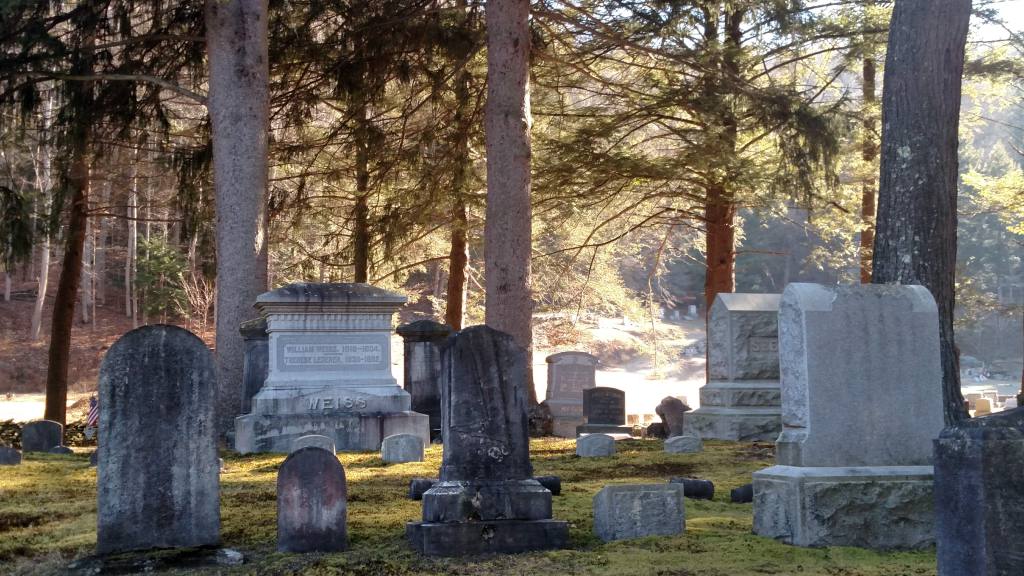
Graveyard I used to run through all the time in the tiny PA town
My first job out of college–minus a short stint at Dunkin–was at Highlights magazine. I was hired as an intern at their editorial offices based in Small Town, PA (why don’t I want to say the name? Why does that seem like the part of this story that is too much?). I had two job offers on the table, this and a corporate writing job based outside of DC that paid 50 percent more, and I chose the children’s magazine because it seemed like 23 was too early to sell out and start a career I already wasn’t stoked about, even though the prospect of having my own office was enticing.
So I left. I moved. The first of many to come.
I liked this Small Town. I liked my 650-square-foot apartment that overlooked the cutesy alley, home to the cheese shop and Vietnamese cafe. I liked my CSA hauls of beets and watermelon radishes. I liked my five-minute walking commute that passed through Central Park (not that one). I liked my office with a Giganotosaurus skull perched in the window, which we decorated with appropriately-timed holiday hats. I liked my job and my friends and the undergrowth of ferns in the preserve that turned vividly green in the spring rains.
Everything can be fine, and life can still feel lacking. The town felt too tight, ill-fitting. I never found anyone like myself.
I started running 2-5 miles after work as a way to clear my head. A loop through town and the graveyard, along the narrow streets that line the river. When the weather got bad, I joined the gym.
Small towns are fascinating because rarely is anything new. Everything is historic and important, and so life is breathed into old Victorian houses, and rundown churches are resuscitated, and nothing is left to rot or fade because even if the people are leaving, even if the people are dying with needles in their arms, the town will prevail.
This is a long way of saying that the gym I joined was in the basement of an old armory. It was windowless and dank, but it was within walking distance of my apartment and I needed an escape from winter, a place to eek out serotonin as my feet pounded the treadmill.
B. was a weightlifter there. Him and his blond-haired friend with biceps the size of couch arms would slip plates onto metal bars and press and sweat and grunt. They knew everyone there. It was a small town after all. I enjoyed eavesdropping when I could.
I don’t remember how it unfolded, how we became gym friends. I think it was the time I was lifting free weights and he offered suggestions for my form. He was cautious about doing so, about offering unsolicited advice, and I appreciated the help that came without condescension.
Maybe it was then. Maybe that was the start.
Anyway, we chatted. His world began to unfold one gym session at a time. I would go to the gym hoping to see him there, hoping he would be there without his friend whom I found wildly intimidating, hoping I could catch glimpses of him in his overly cut t, muscles curving out the sides.
I was obsessed in the way most people are obsessed when they find someone they think can staunch the emptiness, even if just for a little.
A friend at work called him the milk guy because he guzzled water from empty gallon milk jugs.
We talked about New York and how he used to have a penthouse right on Wall Street. He’d talk about the windows, how one wall was entirely glass and how you could see the city sprawl beneath you, a king overlooking his kingdom. He was a big time dealer until he got caught. I never asked about that part. But he used to live in Manhattan and then he lived in jail, where he read Nietzsche and drew pictures that he mailed to his girlfriend, which he regretted because they broke up and he missed those drawings, maybe more than her, and now here he was, back home, fifth generation on his plot of Pennsylvanian land, sober and trying and complaining about Trump. He told me that there was no place he’d rather be than these rolling hills, and whether that was a thought plucked from choice or circumstance I never knew, but I envied his assurance.
Our friendship never left the gym. It never evolved beyond those sparse conversations. He continued coming with his friend and eventually his girlfriend, and I was somewhere in the background, lifting weights with poor form and sprinting to DMX on the treadmill.
My best friend was visiting, and a truck honked at us while we walked down the sidewalk, the driver waving as we were getting three-dollar ice-cream sundaes, our third in as many days.
Who’s that? My friend asked.
It was B. I knew his truck from all the rest.
A flood of Facebook posts has informed me that he’s died. I can’t say I’m overly sad because I barely ever knew him, but the thing about social media is that it keeps all those people alive. In the four years since my Highlights departure, he’s existed as a small photo on a screen where once he was a person sipping water from a milk jug proselytizing Nietzsche, and now he is a swarm of pictures and words and condolences, a gush of affection for this man now gone. I click through the photos. I read all of the memories I was never a part of. Many of them mention the gym.
A small insistent sadness, DeLillo once wrote. I think about that a lot. Pain as pebble-shaped and lasting. I wish we talked about that more. The big grief, yes, but the small griefs too, the pocket-sized sadness of losing someone whose life scraped against yours for a brief moment in time.
What did you lose? That’s what I want to ask everyone now in 2022. There’s this continual push to be happy, to be back to normal, to be past this never-ending pandemic, and I get that, yes, I too want sunshine, but I want to know the shape of everyone’s missing because I don’t believe that anyone escaped these years unscathed. The loss rings and rings and rings and we keep trying to pretend that it’s music.
I text my best friend that B. has died. She’s the only one I ever shared his memories with. And that’s the other thing, I guess. The things we keep to ourselves. The stories, the honesty, the apologies, the declarations. How much is private until a person is gone or distant and then we finally undo our safety vests and take the plunge.
But I want to know now. I’m tired of people believing that things and people will be there when they are ready for them. The world moves on without you.
everything I miss / is a monument / I cannot see through
******
It is midterms and finals week at the school I taught at this past fall. Semester over. New block classes beginning in February, a strange freshness in an otherwise stagnant, gray month. My e-mail account is still active, and notifications flash on my phone.
Coverage needed Testing Schedule, Review ASAP Working from home today
The e-mails from admin aren’t the ones that interest me. It’s the automated ones from students that snag, submissions for their online assignments, ones I assigned months prior. An essay on “All the Gang Bangers Forgot About the Drive-by” by Hanif Abdurraqib. The Othello literary analysis. Socratic seminar questions.
It takes all the meager self-control I possess not to click on them and read their work.
E-mail me with any questions, anything at all, I told my special ed co-teacher and my replacement teacher before I left. I think I left everything in good shape. They waved my concern off. We’ll figure it out; it’s not your problem anymore.
It’s not your problem anymore.
It’s not that I want it to be my problem, not exactly, but I don’t care about the clean hand off. There’s a part of me that wants them to ask: Can you explain how you left the gradebook? What did you mean when you handed out this assignment? Just checking in to tell you how the semester ended. Sometimes I think we just want to be needed.
I don’t open the essays. I am too scared I will leave some sort of digital trace.
And besides, I’m trying to be better about moving on.
******
i will tell you that true wealth is the ability to embrace forgetting.
memory is as fleeting as any other high
******
A fight broke out in the grocery store at eight in the morning the other day. I was there to buy last-minute sunscreen for my canyon hike when I heard, All available security to self-checkout over the PA system. Never a good sign.
When I got there the guy was already on the ground, a smear of blood on the tile and his drink a brown puddle around him. He was still for a concerningly long time, but he eventually stirred and heaved himself off the ground. His tirade wasn’t over. He threw two weak punches at the general manager’s face while yelling about unfairness and accosting other staff members. He was about to throw a punch again when a customer came up behind him, pulled him into a headlock, and tossed him to the ground.
And just like that, he became a baby. Everyone filming stepped closer.
Don’t hurt me. I had surgery. I have a hernia, he mewled while the tattooed man kept a knee on his back. My shoulders hurt, he begged. Be careful. It hurts.
And then he said it:
I can’t breathe.
He was white. This middle-aged, presumably drunk man who started a fight in Albertson’s at eight in the morning to the left of the Starbucks kiosk who was now on the floor for the second time in five minutes with minor blunt force trauma and his blood on the linoleum.
I thought of Eric Garner in New York who died saying those exact same words. And I thought of how those words became co-opted by the right, how they made jokes and ridiculed using the phrase of a dead man, how videos would surface of people laughing and joking about it, a dead man dying on the sidewalk in New York, and here is this white man being put in cuffs now that the officers have arrived, and sometimes life feels like a film reel only someone spliced it with scenes from another movie and you see another reality in the space of a blink, is that real, is that life, and you realize the plot only works because someone engineered it this way, that the universe is only random when society is removed, and that depending on who the person is lying on the floor, we might already know the ending.
******
the walls opened up bullet holes like the small mouths of boys trying to sing along to hymns
******
Nostalgia has long, sticky hands.
My staff were making plans on Friday afternoon—a bonfire that evening, surfing on Sunday—and it was a strange, knotty feeling that none of that involved me. I didn’t want it to, not really, but it was a sudden reminder of all the things that were no longer mine, places & moments & people cemented firmly in the past. Life moves forward, whether you want it to or not.
******
stubbornly in love with the idea of staying.
******
The eight-in-the-morning Albertson’s fight made me think of the school I’d left behind, the fights that broke out like tornadoes.
There was a nation-wide school shooting threat on one of my last days there. Another teacher and I sat in a darkened room during an off-period to grade and last-minute lesson plan, and we chatted about the atmospheric threat. I was listening to Barb talk about it, he told me, and what she said made total sense. I’d never really thought about it like this, but there’s no Black school shooters, you know? And she was saying how when students like ours get upset, they take it out one-on-one. They target that person and just punch them in the face. But when it’s a white guy, he feels like all of society has wronged him, like everyone needs to be punished because he didn’t get what he thought he deserved.
******
but then how do you explain the way the space in between bodies in a shared bed can feel like an entire country?
******
There’s a long, cone-shaped plant that grows around here, something I used to know the name of. In my head, I call it green gentian, even though I know it’s wrong. Wrong name. Wrong place. Wrong time. But wasn’t it just yesterday I was learning my Rocky Mountain wildflowers? Wasn’t it last season when I would try to get a picture of penstemon in perfect lighting and imagine how columbines looked like tiny baby squid?
A man paused on our hike today. Do you know what this is? He asked me as our group walked ahead. Looks like yarrow, I said, thinking of Colorado and the yarrow plants I identified for the first time on our staff camping trip, how Nika said it was her favorite. You’re right. Good job.
I didn’t know yarrow grew out here. Maybe I never knew.
******
I imagine in a field somewhere all the parts of myself I left behind writhing themselves back together
******
On my way out of the canyon yesterday, after the eight am Albertson’s fight, after my staff had a bonfire with only each other, after I woke up with a blank canvas day ahead of me—no retail gig to work, no papers to grade—I found my first bay tree since being back. I walked out of the canyon with my right hand smelling of bay and my left of sage, and I sat for half an hour under a sprawling coast live oak and watched cows roam the hills while mountain bikers raced by below them, and the other day I watched monarchs rest in the lemon tree near my porch, and the laser was broken so I couldn’t show my staff Taurus high in the sky during astronomy, but I found it for myself and maybe that’s all that matters.
******
i’m kind of a hive with no begging & hollow cavities.
******
Hi Ms. Kaiser…
the email lands in my inbox.
I open it.
.
.
.
.
Sections in italics are taken from the poetry collection “A Fortune for Your Disaster” by Hanif Abdurraqib.
I packed up my car, gave the sink a final scrub, and headed west through the cornfields. I’ve wrote about goodbyes a lot on this blog, so here we go again. There is never enough time to see everyone, to visit all the places I meant to go, to have one last night of dinner and drinks. Goodbyes always feel inadequate. Sometimes I think it’s better just to leave.
My first stretch of driving was 14 and a half hours. It sounds terrible, and sometimes it is, but sometimes I arrive at my sister’s house and wish I still had a couple hundred miles to go. There’s something inexplicably fulfilling about these trips—driving by myself, playlists on loop, left leg bent butterfly-style on the seat. My mind wanders. My car goes onward. I am just existing and breathing, hurtling through the countryside in a rusty metal box with all of my beloved possessions inside. There’s something zen about it all. Besides, when you drive 14 and a half hours, it means that you’ll always catch sunset and that’s the best time to highway drive.
Sometimes I wonder if I’ll miss this, the times when it was just me and my car, and I could drive for as long as I wanted and never stop for food and listen to the same songs on repeat. I know there will come a time when driving 14 and a half hours is no longer feasible, and it is a strange feeling to miss something before it’s gone, to shade the moment with nostalgia while you are still existing inside of it.
On long drives, you think a lot. You think and dream and remember. You make plans for the future, and think about every time you felt hurt this past year. You dredge up people from the past who should probably stay buried. You imagine parties that will never happen and words that people will never say.
I thought about my students a lot on this drive. Former students, I should say. I will never hear from or see most of them ever again, and I hate that. What happens next? How does it end? What will they turn in for the essay I assigned on Othello? Will they graduate? Who will go to college? Good luck on your next chapter is the adage I’ve been hearing of late. And, yes, I am excited, and yes, it’s the right choice, but I want to know how this story ends too. I want closure, even if such a thing doesn’t exist.
I wrote personalized letters to each of my seniors before I left, which I handed out during our final class together. They remarked on the stationery, which I’d specially bought, and how their names looked in cursive. Miss, I don’t want to ruin the envelope.Miss, you’re going to make me cry. I can’t open this right now. There’d been a late-night basketball game and a school shooting threat the day before, so those two combined meant that all my classes had about 50% attendance. I’d wished they’d all been there, so I could see everyone one last time, but nothing ever ends like you think it will, and, like I said, I’m not sure how much goodbyes do to cushion the act of leaving. It was what it was. I gave them their letters and they spent most of class talking about acrylic nails.
But here are a couple. Here is what I’m taking with me:
M and C got me gifts on my last day. Is it OK if I film youopening them, one asked. Of course. She pulled out a small camcorder and told me to go ahead. They were thoughtful, lovely gifts. My favorite candy, a candle, socks, a reusable coffee mug. The receipt’s in there if you don’t like it, the boy told me. They were all from the store he worked at. Wouldn’t it be funny if I returned them all and you were the cashier? I told him. He laughed. That weekend at REI, I took a picture of the coffee mug they’d given me nestled between all of my coworkers’ stickered water bottles. I sent them the picture so that they knew I’d already used it.
M and C asked for passes to be excused from study hall so that they could sit with me in my off period. They both came to my classroom after school once they had their phones back to take pictures with me. I smiled even though you couldn’t see it beneath my mask.
I saw J at his basketball game that Saturday. He was one of those who wasn’t there my last day. He took both of my classes, meaning I saw him for over two hours every day and read all of his writing, and he was one of the few I really wanted a proper goodbye from. It was a varsity-only game, girls playing first and then the boys. He came up to me during the girl’s halftime. How was your last day? he asked. I’m still working on that essay. I know I have some work to turn in to you. He, in fact, had very little work he owed me, and he knew this, but school is easy to talk about, a guaranteed relation point. Besides, we both silently knew that I wouldn’t be the one reading any of his future submissions. We chatted briefly and then he shook my hand and returned to his team, and I think we both just didn’t know how to say goodbye.
L was also at the basketball game. She came up to me after she finished playing. I’m sorry I wasn’t in class on Friday. Our game went late the night before, and my mom told me I should just stay home, and then I remembered it was your last day. I got you a gift card, but my mom forgot to bring it. I wish you could’ve met my mom. She was just here! I’ve mentioned you to her before, how great you are and how much I enjoyed your class. We talked about the game briefly and how well she did. You’re a wonderful teacher, she told me. You should keep teaching. Keep teaching kids like us. I keep those words with me as I pack up my life and move westward. Keep teaching kids like us.
T is another one of my favorites, one of the few who I had for both classes, and I saw her from a distance at the basketball game. She didn’t come over and I didn’t push anything. I never know if I should force goodbyes. I think you and I are a lot alike, she told me in one of our last classes. I think she is right.
The thing about endings is that nothing ever really ends and closure only works if you don’t pick at the wound and there will always be unfinished stories, lingering threads, and you will realize that the easiest person to haunt is yourself.
The last time I saw V she had another girl by the braids and was throwing her against a locker; she is so smart and capable, and I want her to prove everyone wrong. And I wonder about TJ and the poetry she unearthed within herself in the final weeks of our time together, and I want her to keep digging, keep pushing, keep bringing the blackness to light. And I think about J and how she wrote dark, twisted dual POV stories, and I hope high school gets easier, and S who was struggling with depression but trying her best and doing such a good job, and P who was the best writer in her class and was trying to be very practical about college and would sometimes ask me Miss, how did you figure out what to do next, and JF who wrote an essay about the time his friend got shot in Puerto Rico and how he biked over to help, and SN who emailed me with an essay draft the week of Christmas, asking if I could look over it because she didn’t trust the new teacher yet.
And I think about all the writing I received. The writing about abuse and broken hearts and anime characters that I had to google. And I think of L standing on a desk to read out the lines from Othello and how they all hated Iago so damn much (He’s a snake, Miss!). And DJ who was so into the fan fiction he was writing for class that I watched him scribble new scenes during study hall, head bent over, focused. And the kids in study hall who would bother me because they were bored. And the students who all told me I’ll have you next semester and who I didn’t bother to correct otherwise.
It is hard to articulate how much I care about some people and how much time they spend alive inside my head.
I’m writing this in a coffeehouse in Sedona as the clouds threaten snow and a blond-haired man reads the No Fear Shakespeare version of The Tempest on a chair nearby (life is never not poetic). A student emailed me for a college reference that’s due Friday, and instead of writing that, here I am. Conclusions are the toughest part, I wrote on a student’s essay yesterday at a motel in Kansas. Like I said, nothing ever really ends, and when people tell me that this is a fresh start, a new beginning, I want to tell them that it’s really just a continuation, a natural progression for what happens next, and that I feel no particular grandeur about the moment, the move. Nothing ever really ends, it just changes form. The moment becomes a memory. The people live on inside of you.
I only have 10 hours of driving left and honestly that makes me a little sad. Sometimes I feel like I could drive forever, disappear into the earth, into my own head, swallowed by ocean and salty cliffs. When you drive long distances, at some point you run out of things to think about. You’ve done the podcasts, done the playlists, mentally relived moments a hundred times. At some point, you just drive.